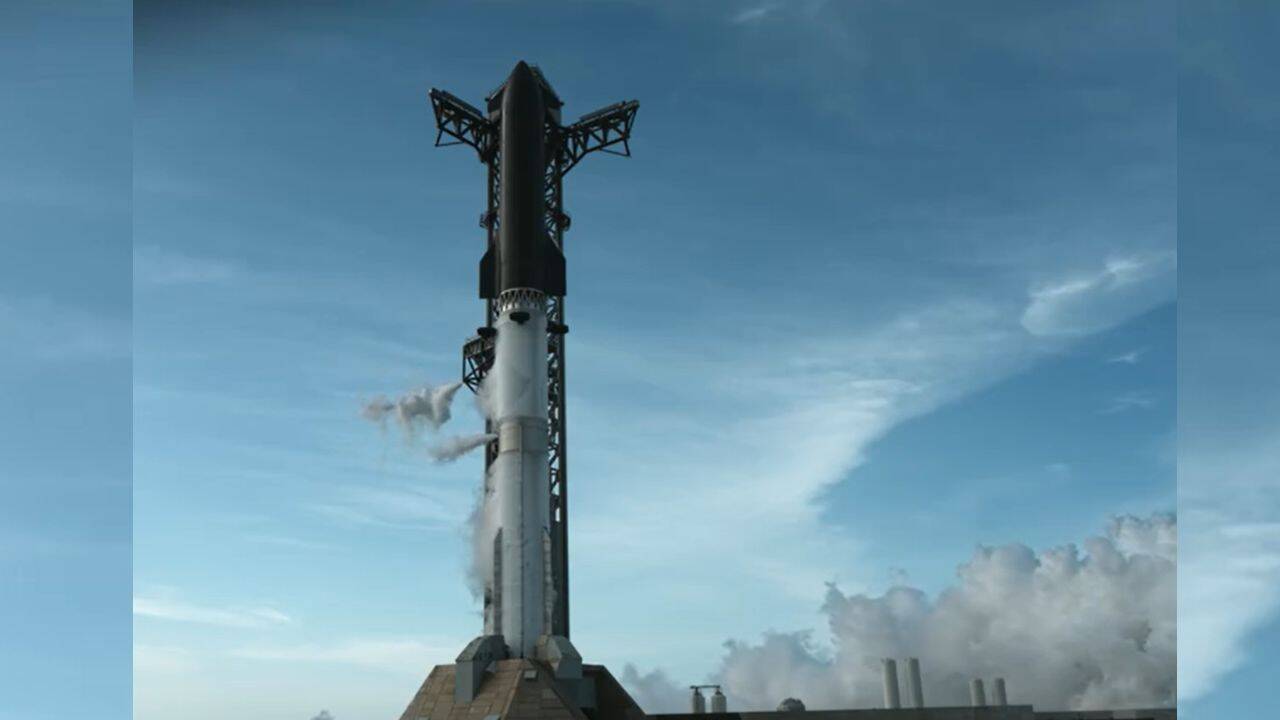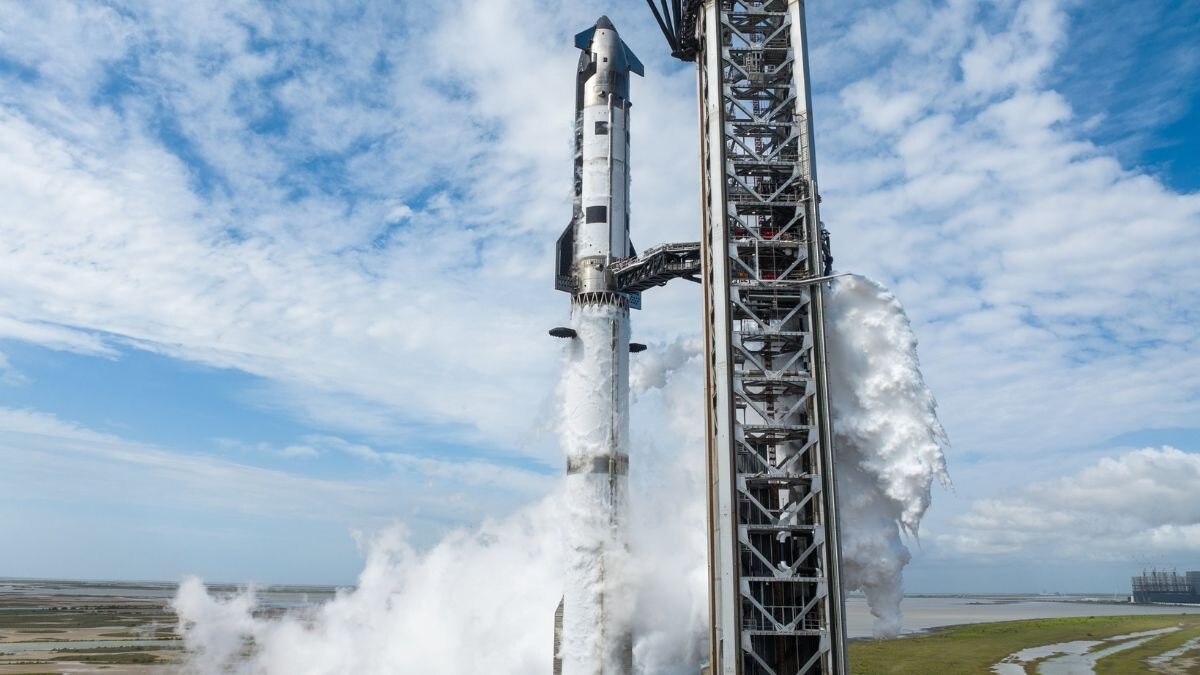
SpaceX is set to launch its 13th integrated Starship flight from Texas, deploying 20 new V3 Starlink satellites for the first time. The mission will also evaluate heat‑shield upgrades, a Raptor engine restart, and Super Heavy booster improvements crucial for future lunar and Martian missions.
Key Takeaways (मुख्य बिंदु)
- Starship Flight 13 will deploy 20 V3 Starlink satellites – a first for the vehicle
- Tests include Raptor engine restart, upgraded heat‑shield tiles, and Super Heavy booster refinements
- Mission paves the way for fully reusable rockets supporting lunar, Artemis and Mars programs
SpaceX’s next‑generation Starship and its Super Heavy booster are poised on launch pads at Starbase, Texas, ready for the 13th integrated flight test. This mission aims to release 20 third‑generation (V3) Starlink satellites while simultaneously validating a suite of technologies that will underpin future lunar and Martian expeditions.
First Operational Deployment of V3 Starlink
For the first time, Starship will carry and release V3 Starlink satellites, each equipped with larger solar arrays, enhanced communication antennas, and laser‑link capabilities designed to mesh with the existing constellation. While the satellites will follow the same sub‑orbital trajectory as the vehicle and are expected to burn up upon re‑entry, the test will demonstrate the deployment mechanism and the satellite’s ability to power up and establish links.
Heat‑Shield Imaging and Engine Restart
Six of the satellites bear high‑resolution cameras tasked with photographing Starship’s heat‑shield tiles during flight. To simplify visual analysis, SpaceX has painted select tiles white, mimicking missing tiles and creating reference points. A core objective is the in‑space restart of a Raptor engine—a capability essential for orbital maneuvers, satellite deployments, lunar landings, and eventual Mars missions.
Super Heavy Booster Improvements
Following Flight 12, where five Raptor engines failed to relight during the boost‑back burn, engineers have overhauled startup sequences, upgraded hardware, and refined fault‑detection algorithms. The booster will now attempt a full launch‑to‑stage‑separation, boost‑back, landing burn, and a controlled splash‑down in the Gulf, proving its reliability for future heavy‑lift missions.
Implications for Future Spaceflight
Flight 13 represents more than a launch; it is a critical step toward a fully reusable launch system that could dramatically lower costs, support larger satellite constellations, and enable NASA’s Artemis lunar program and human missions to Mars. Each successful test point brings SpaceX closer to making Starship the backbone of a new era in space transportation.