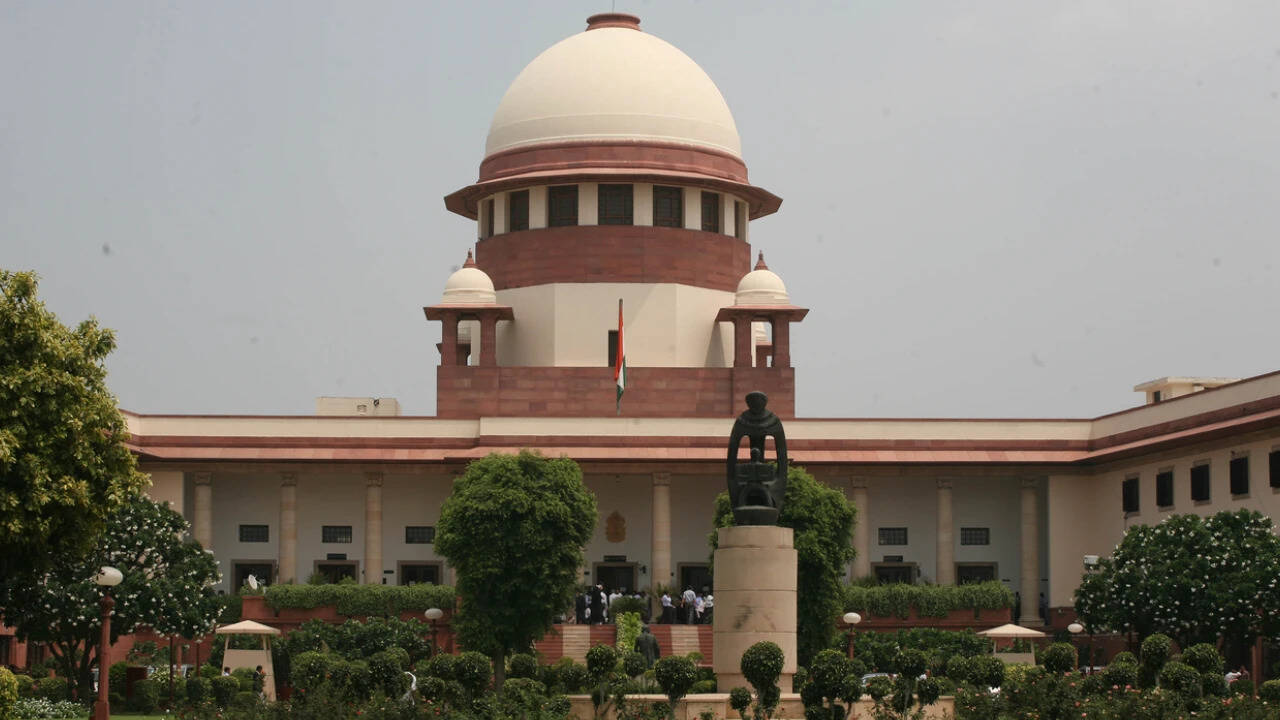
The Supreme Court rejected a petition to stay CBSE's mandatory three‑language scheme for Class 6, while raising the question of whether English can be deemed an indigenous language. The ruling has implications for India's language policy and multilingual education framework.
मुख्य बिंदु (Key Takeaways)
- The Supreme Court urges a fresh look at defining English as an indigenous language.
- The petition to halt CBSE's three‑language scheme was dismissed without a detailed hearing.
- The Centre and CBSE will submit their responses within ten days.
New Delhi: On Tuesday, the Supreme Court of India raised a pivotal question – can English be classified as an indigenous language? The query surfaced as the apex court declined to stay the Central Board of Secondary Education’s (CBSE) decision to make a three‑language curriculum mandatory for Class 6 from the current academic session.
Legal Context and Policy Rationale
Under the new scheme, students will study Hindi, a regional language of their choice, and English, aligning with the constitutional aim of promoting Hindi alongside regional tongues. The move also echoes the National Education Policy (NEP) which envisions a multilingual India rooted in its cultural ethos. However, the bench comprising Chief Justice Surya Kant, Justice Joymalya Bagchi and Justice V. Mohana refused to grant an interim stay, noting that “the nomenclature of indigenous languages may require a relook.” The matter is slated for a detailed hearing on July 22.
Petitioners’ Concerns
Senior advocates representing the petitioners argued that although 22 languages are listed as options, schools lack the capacity to recruit teachers and develop infrastructure for such a vast linguistic palette. They highlighted that the NCERT website currently hosts textbooks for only three of the 22 languages, despite earlier promises of full availability by July 1. This shortage, they contended, hampers the practical implementation of the three‑language formula.
Government’s Response
Additional Solicitor General Aishwarya Bhati stated that the Union Government and CBSE will file written responses within ten days. In its earlier reply, the Centre reaffirmed that the NEP seeks an education system grounded in Indian ethos, fostering a vibrant knowledge society. It emphasized that the three‑language formula will continue, respecting constitutional provisions, regional aspirations, and the need for flexibility – no language will be imposed on any state.
Implications for the Future
The court’s willingness to revisit the definition of “indigenous language” could reshape language policy debates across India. If English is re‑characterized, it may affect curriculum design, teacher training, and even the cultural narrative surrounding linguistic identity. Moreover, the decision underscores the tension between aspirational policy goals and on‑ground realities such as resource constraints and textbook availability.