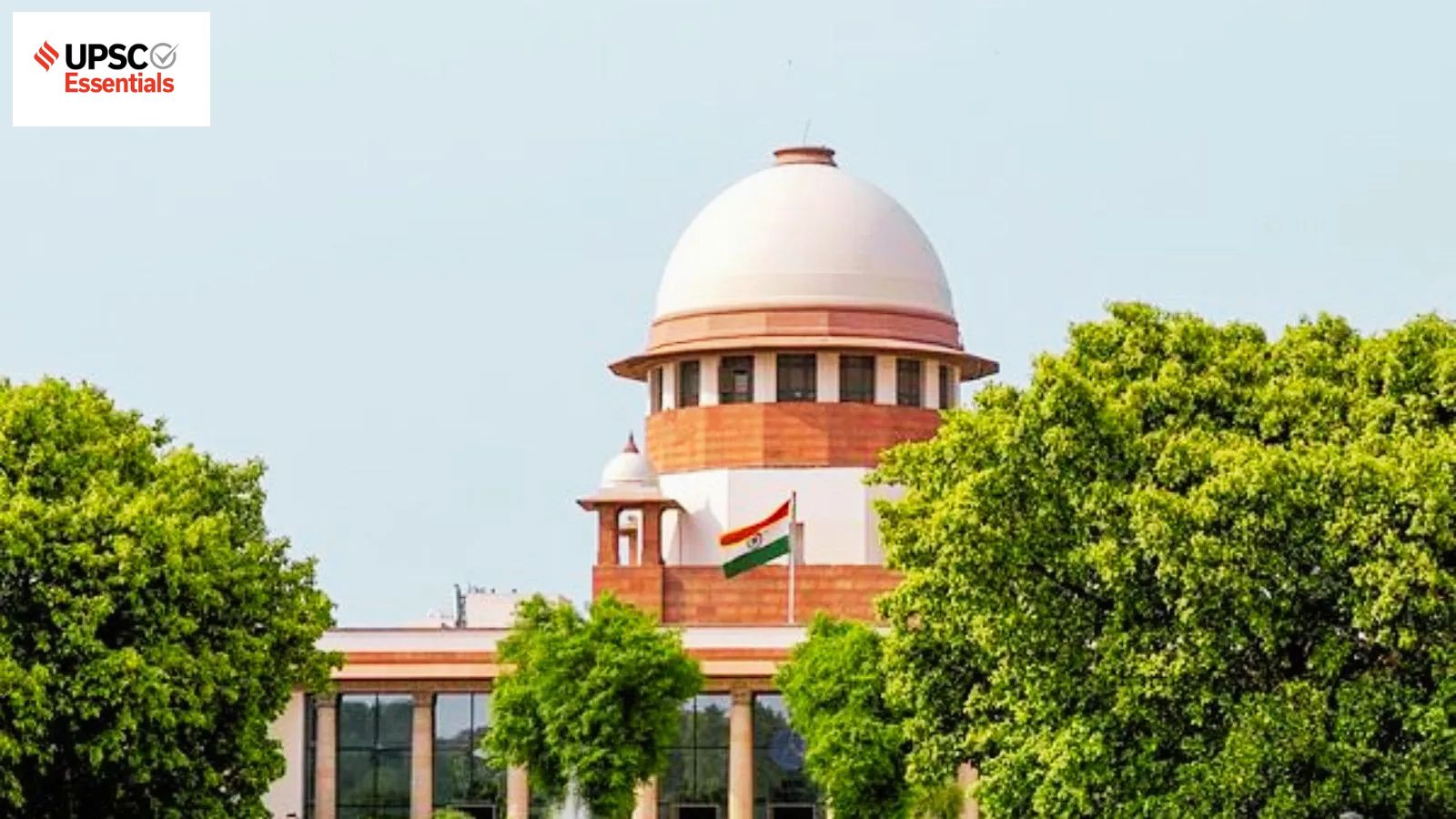
The weekly UPSC 2027 prelims quiz on Polity and Governance covers the Supreme Court's 2026 AI regulations, the states involved in the Narmada water dispute, and other pivotal topics, offering aspirants a focused revision tool.
Key Takeaways
- The Supreme Court's 2026 AI Regulations permit administrative uses but forbid algorithmic judgment.
- Four states—Madhya Pradesh, Rajasthan, Gujarat, and Chhattisgarh—are parties to the Narmada Water Dispute.
- Mastering these subjects is crucial for UPSC aspirants as they recur in the exam.
The Supreme Court (SC) released a draft of the “Regulations for Use of Artificial Intelligence (AI) in Courts, 2026,” aiming to create a robust governance framework for AI deployment within the judiciary. The draft explicitly allows AI for administrative and assistive tasks such as case‑management, transcription, translation, legal research, and document summarisation, provided a written approval is obtained from the Apex Body of the SC or the respective High Court’s AI Committee.
Practical Implications of the AI Rules
Crucially, the regulations state that no judicial outcome may be rendered solely through algorithmic decision‑making. Human judges retain the final authority, and AI can only serve an advisory role. Moreover, the draft bans the use of AI for “risk scoring,” bail eligibility assessment, predicting recidivism, or any “black‑box” system that could affect personal liberty without full transparency. These prohibitions aim to safeguard due‑process rights while allowing technology‑driven efficiencies.
Implementation Timeline
These regulations are not automatically binding. They will come into force for the Supreme Court on a date notified by the Chief Justice of India, and separately for each High Court as per their respective Chief Justices. This staggered rollout enables courts to adopt AI at a pace suited to their infrastructure and case‑load requirements.
Narmada Water Dispute Overview
The Narmada Water Disputes Tribunal (NWDT), constituted in 1969, delivered its award in 1979, allocating water shares and power generation benefits among Madhya Pradesh, Rajasthan, Gujarat, and Chhattisgarh. Recent agreements among the chief ministers of these states aim to settle outstanding dues related to the Sardar Sarovar and Indira Sagar projects, reinforcing inter‑state cooperation on water‑resource management.
Strategic Preparation for UPSC
UPSC candidates should integrate these two topics into their static syllabus revision. For the AI regulations, reviewing the Supreme Court's official draft, analyzing commentaries from legal scholars, and practicing MCQs that test the nuances of permissible versus prohibited uses will be beneficial. Regarding the Narmada dispute, understanding the historical timeline, the Inter‑State River Water Disputes Act, 1956, and the socioeconomic implications of the associated hydro‑projects will enhance answer quality in both prelims and mains.
Future Outlook
As digital technologies permeate the judiciary, India’s AI framework could become a benchmark for other common‑law jurisdictions. Simultaneously, effective water‑sharing mechanisms among the Narmada basin states will remain critical for regional development, energy security, and climate resilience.