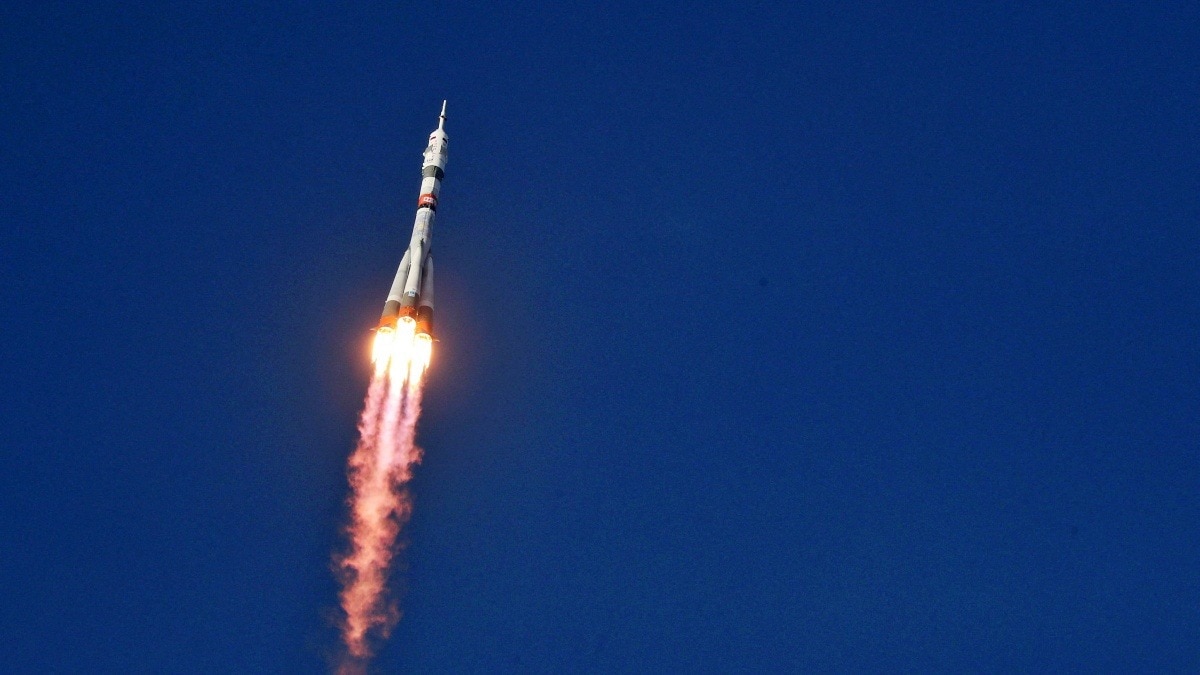
NASA astronaut and emergency‑medicine specialist Anil Menon lifted off aboard a Soyuz spacecraft to begin an eight‑month stay on the International Space Station. The mission will focus on AI‑assisted ultrasound, semiconductor fabrication and human physiology studies in microgravity.
Key Takeaways
- Anil Menon launched on a Soyuz vehicle for an eight‑month ISS expedition.
- The mission includes AI‑assisted ultrasound, semiconductor manufacturing, and bioprinting experiments.
- Data gathered will inform future lunar and Martian crewed missions.
Anil Menon, an Indian‑origin American astronaut, lifted off from the Baikonur Cosmodrome on July 14, 2026 aboard Soyuz‑BCS‑3 with two Russian cosmonauts. He will spend the next eight months aboard the International Space Station (ISS), serving both as a researcher and a test subject for long‑duration spaceflight studies.
Journey to Orbit and Professional Background
Menon is a physician specialized in emergency and aerospace medicine, previously serving as a flight surgeon for NASA and commercial space programs. His dual expertise in clinical care and spaceflight physiology made him an ideal candidate for a mission aimed at deep‑space health research.
Scientific Objectives of the Expedition
The primary goal of the mission is two‑fold: to generate critical data on how prolonged exposure to microgravity affects the human body, and to validate emerging technologies that could become indispensable on future lunar or Martian outposts.
AI‑Assisted Ultrasound Scanning
One of the flagship experiments involves an artificial‑intelligence‑driven ultrasound system that enables astronauts to perform complex imaging with minimal Earth‑based medical support. This capability is essential for deep‑space missions where communication delays can exceed several minutes.
Semiconductor Fabrication in Microgravity
Menon will also help test the production of high‑quality semiconductors in the weightless environment of space. Researchers anticipate that the absence of gravity‑induced defects could yield more uniform crystal structures, potentially revolutionizing high‑performance computing and communications hardware on Earth.
Bioprinting and Age‑Related Research
Another high‑profile study focuses on bioprinting tissues in microgravity, aiming to improve the structural integrity of complex biological constructs. Success could accelerate regenerative‑medicine therapies and deepen our understanding of the aging process.
Implications for Future Space Exploration
The data collected by Menon will feed directly into NASA’s Artemis program and the agency’s long‑term vision of crewed missions to Mars. By elucidating the physiological challenges of weightlessness and validating cutting‑edge medical and manufacturing technologies, the mission paves the way for safer, more sustainable human presence beyond low‑Earth orbit.