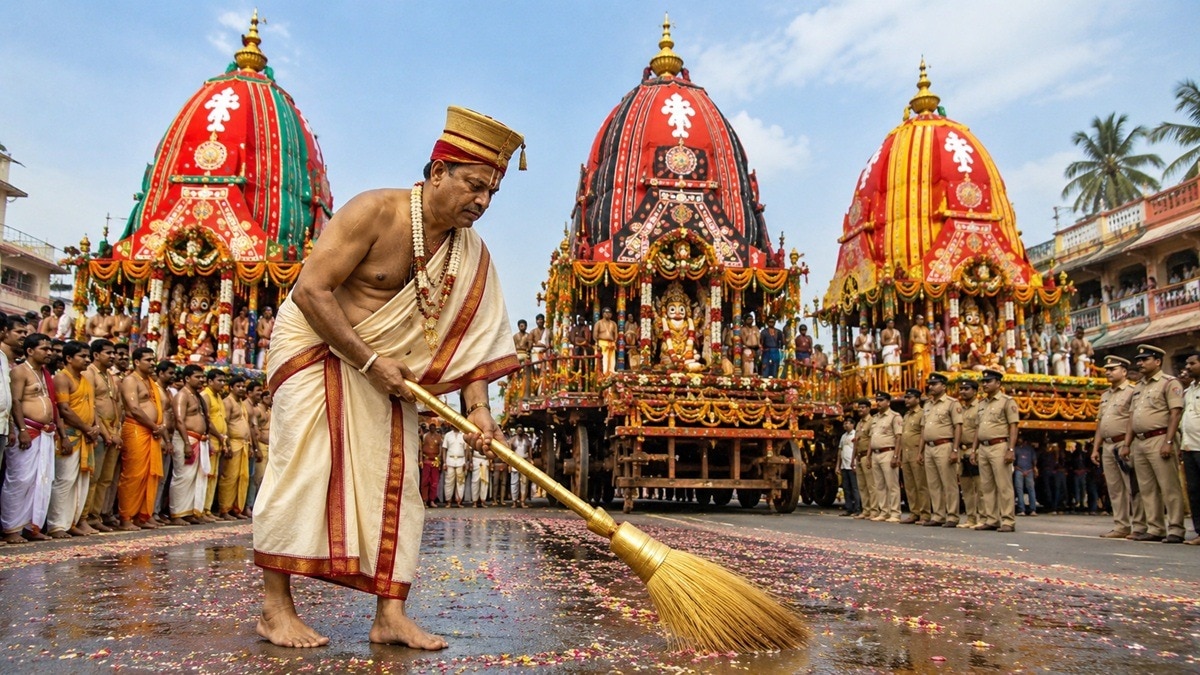
From July 16, 2026, the Jagannath Rath Yatra will begin in Puri, featuring a unique ritual where the Gajapati Maharaja sweeps the chariot path with a gold‑handled broom. The practice symbolizes purity, equality and prosperity, a tradition that has endured for centuries.
Key Takeaways (मुख्य बिंदु)
- Gold‑handled broom represents purity and divinity.
- Cleaning the route conveys equal respect for all participants.
- The ritual attracts prosperity and positive energy.
The Jagannath Rath Yatra, one of Hinduism’s most celebrated pilgrimages, kicks off on July 16, 2026, in the coastal city of Puri. Lord Jagannath, accompanied by his elder brother Balabhadra and sister Subhadra, rides in opulent chariots that traverse the city’s main thoroughfares. Amid the fanfare, a lesser‑known yet striking tradition unfolds: the Gajapati Maharaja or his heir sweeps the chariot’s path with a broom whose handle is plated in gold.
Historical Roots and Symbolism
References to golden brooms appear in Vedic literature, where gold is revered as a symbol of purity, sanctity and divine power. Ancient scriptures prescribe that a deity’s vehicle be preceded by a gleaming path to dispel any negative forces. This belief has been preserved by the Gajapati dynasty of Puri, turning the golden‑broom sweep into a ritual that elevates the spiritual gravitas of the Yatra.
Three Core Reasons Behind the Golden Broom
1. Purity and Sanctity: The gold‑handled broom is considered a conduit for both physical and metaphysical cleanliness. Devotees hold that sweeping the route with this sacred implement removes karmic impurities, ensuring a propitious journey for the deities.
2. Message of Equality: When the Gajapati himself wields the broom, it sends a powerful message that before the divine, king and commoner are indistinguishable. The act embodies humility, service and the highest ideal of social equality—an especially resonant theme in today’s hierarchical societies.
3. Prosperity and Positive Energy: In Hindu belief, gold signifies wealth, fortune and auspiciousness. The ritual is thought to infuse the procession with positive vibrations, inviting Lord Jagannath’s blessings of abundance and well‑being upon the gathered faithful.
Contemporary Relevance
Beyond its religious significance, the golden‑broom tradition reinforces Puri’s cultural continuity and bolsters its tourism economy. Each year, millions of pilgrims converge on the city, drawn not only by the spectacle of the chariots but also by the deep‑rooted customs that connect generations. As the 2026 Yatra approaches, scholars and devotees alike anticipate how this age‑old practice will continue to shape the spiritual atmosphere of the event.
In an era where ritual can sometimes appear anachronistic, the golden‑handled broom stands as a vivid reminder that symbols, when understood in their original context, retain the power to inspire, unite, and elevate societies.