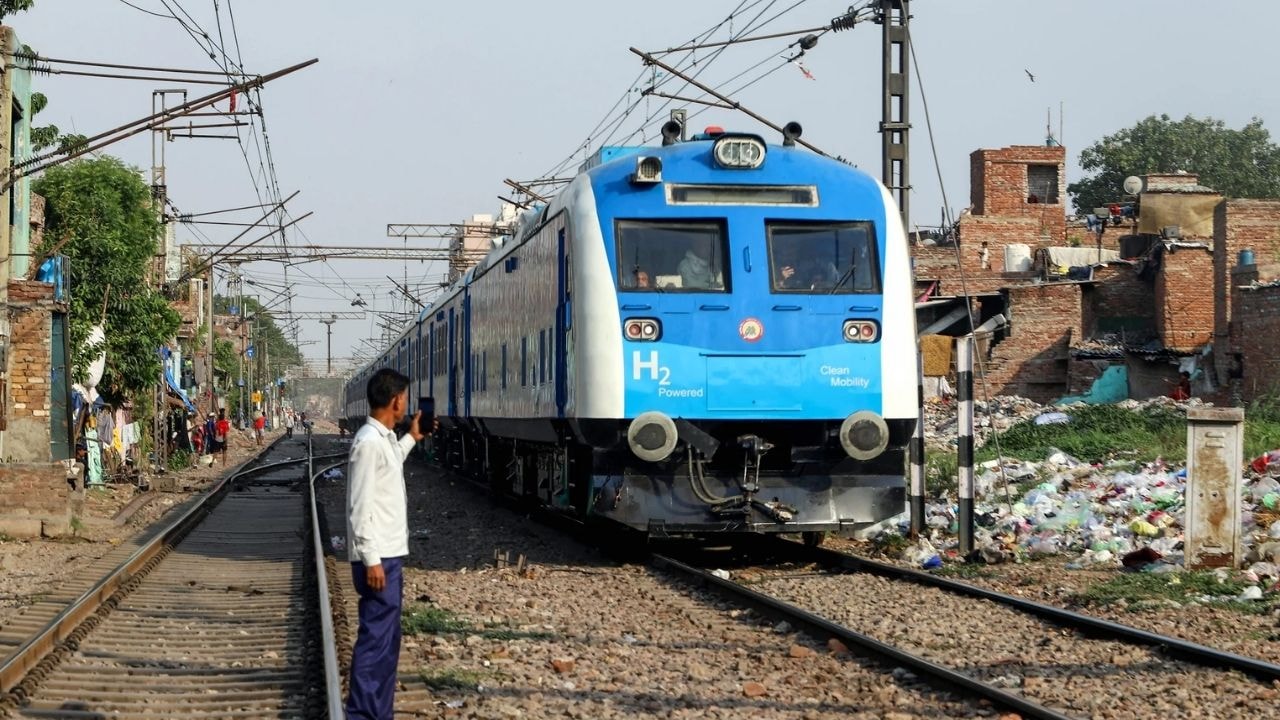
Indian Railways is set to debut its first hydrogen-powered train, marking a monumental shift towards green energy and sustainable transit. Operating at a design speed of 110 kmph and carrying up to 2,600 passengers, this project places India among a select elite of nations pioneering zero-emission rail technology.
Key Takeaways
- India's first hydrogen-powered train will carry up to 2,600 passengers with a design speed of 110 kmph.
- The initial trial run is scheduled on the Jind-Sonipat route in Haryana.
- This initiative supports Indian Railways' goal of becoming a Net-Zero Carbon Emitter by 2030.
Indian Railways is on the verge of a historic milestone as it prepares to launch the nation’s first-ever hydrogen-powered train. Designed to carry up to 2,600 passengers at a top speed of 110 kmph, this revolutionary project represents a massive leap forward in India's transition to green energy. With this development, India joins an elite league of global powers—including Germany, Japan, China, and the United States—that are actively implementing hydrogen fuel cell technology in their rail networks.
Technical Specifications and Route Details
The pilot project is slated to run on the 89-kilometer Jind-Sonipat section in Haryana. Unlike traditional diesel engines, hydrogen trains emit only water vapor and warm air, making them entirely carbon-neutral. The train will utilize hydrogen fuel cells to generate electricity, which then powers the traction motors. This state-of-the-art propulsion system ensures silent operations and significantly reduces noise pollution compared to conventional locomotives.
Strategic Alignment with Green Missions
This initiative aligns perfectly with the Indian government's National Green Hydrogen Mission, which aims to make India a global hub for the production and export of clean hydrogen. By replacing diesel-powered multiple units (DEMUs) on non-electrified routes, the railway sector hopes to curb its massive carbon footprint. This transition is crucial for Indian Railways' ambitious target to achieve net-zero carbon emissions by the year 2030.
Global Landscape and Economic Viability
Globally, Germany led the charge by launching the world’s first commercial fleet of hydrogen passenger trains in 2022. While the initial setup and infrastructure costs for hydrogen production and storage facilities remain high, experts suggest that long-term environmental benefits and declining costs of renewable energy will make hydrogen rail highly viable. India’s indigenous development of this technology under the 'Make in India' initiative is expected to drive down costs significantly in the coming years.