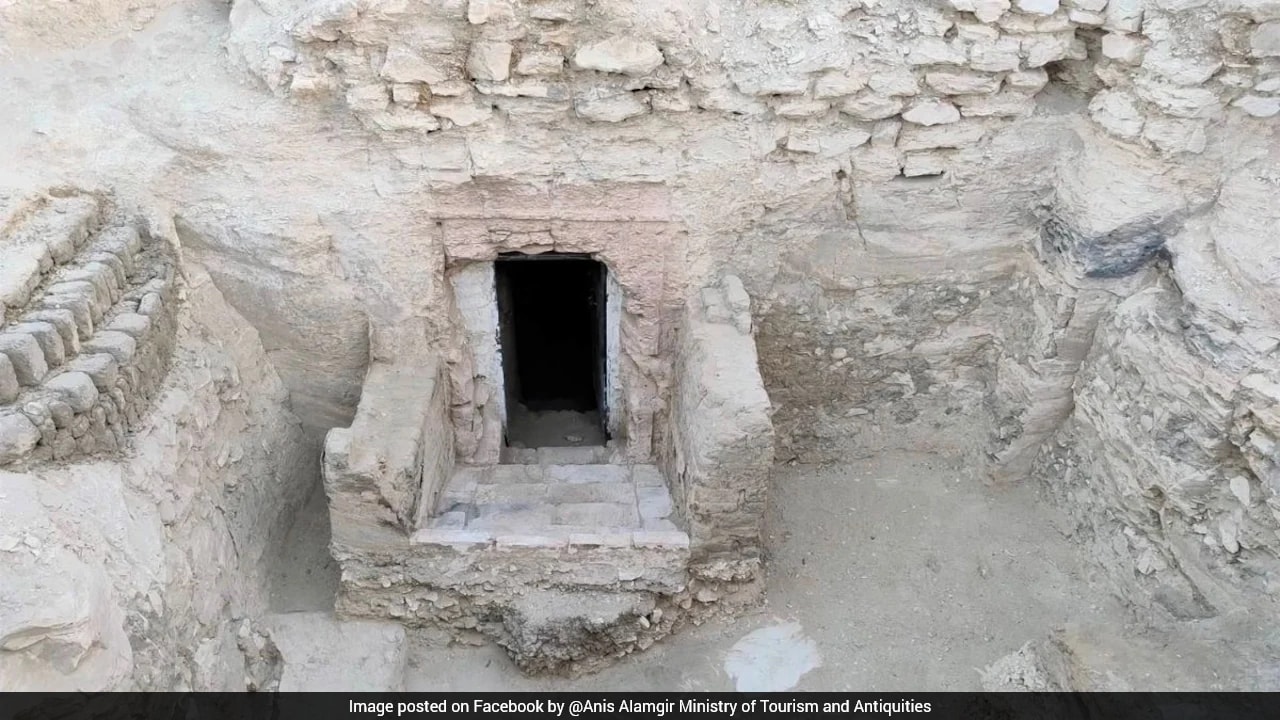
A Dutch archaeological team from Leiden University has uncovered a Ramesside period tomb in the Sheikh Abd el‑Qurna necropolis on Luxor’s West Bank. The tomb features an open courtyard leading to an inverted “T” shaped rock‑cut chapel.
मुख्य बिंदु (Key Takeaways)
- Nearly 3,000‑year‑old Ramesside tomb discovered in Luxor
- Identified as belonging to a man named Paser
- Excavated by a Dutch mission from Leiden University
A joint Dutch‑Leiden University archaeological mission has announced the discovery of a remarkably well‑preserved tomb in the Sheikh Abd el‑Qurna necropolis on the West Bank of Luxor. Radiocarbon dating and stylistic analysis place the monument firmly within the Ramesside period (c. 1292‑1077 BCE), a time when Egypt’s New Kingdom reached its zenith under the reign of the great pharaohs Ramesses II, III and IV.
Architectural Layout and Symbolism
The tomb’s layout is striking: an open courtyard opens onto a rock‑cut chapel whose plan resembles an inverted “T”. This unusual shape is thought to have facilitated specific ritual movements, allowing sunlight to illuminate the inner sanctum at precise times of the year. Such architectural nuances provide fresh clues about the religious practices and astronomical knowledge of Ramesside elites.
Who Was Paser?
Inscriptions on the tomb’s walls name the interred individual as Paser. While the exact rank of Paser remains under investigation, the scale and quality of the tomb suggest he was a high‑status official, possibly a regional governor or a senior priest. The find thus adds a new data point to the social hierarchy of Ramesside Egypt, where tomb size and decorative complexity were direct reflections of one’s proximity to the pharaonic court.
Methodology Behind the Discovery
The Leiden team employed a combination of satellite imagery, ground‑penetrating radar (GPR) and systematic surface surveys over several months. This multi‑disciplinary approach enabled researchers to pinpoint the tomb’s location amid the densely packed necropolis without extensive invasive digging. The precision of modern remote‑sensing tools, coupled with traditional field archaeology, demonstrates how 21st‑century technology is reshaping the study of ancient sites.
Implications for Future Research and Conservation
Beyond its immediate historical value, the tomb raises pressing questions about site preservation. Luxor’s West Bank faces increasing pressures from tourism, climate‑induced erosion, and illegal looting. Conservation experts are now tasked with developing a sustainable management plan that protects the tomb while allowing controlled public access. Moreover, artefacts that may emerge from the burial chamber—including funerary masks, shabti figures, and hieroglyphic tablets—could illuminate daily life, funerary customs, and artistic trends of the late New Kingdom.