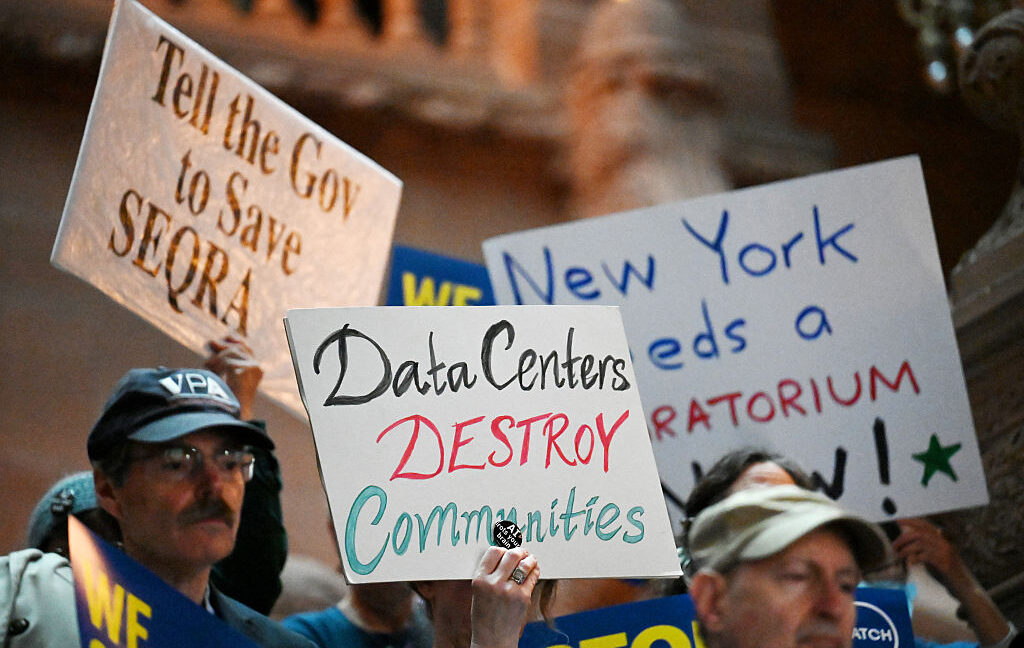
Governor Kathy Hochul announced a statewide ban on building data centers larger than 50 MW for a year, citing environmental and resource concerns. The move could set a precedent for nationwide restrictions amid growing AI‑related debates.
Key Takeaways
- New York halts construction of data centers 50 MW or larger for one year.
- Environmental, energy‑cost and water‑scarcity worries are fueling national calls for similar bans.
- The moratorium may become a template for future federal AI‑related regulations.
Democratic Governor Kathy Hochul announced on Tuesday that New York will impose a one‑year moratorium on the construction of massive data centers consuming 50 megawatts or more. State officials told Reuters the freeze will remain until “consistent standards” for responsible data‑center development are defined.
Environmental and Economic Background
Across the United States, data‑center expansion has surged, driving up electricity demand, water consumption for cooling, and carbon emissions. Large facilities often rely on vast water supplies and non‑renewable power, intensifying concerns in regions already grappling with water scarcity and rising energy prices. Environmental groups and local communities have therefore amplified calls to pause new builds, especially for projects that could exacerbate climate‑change pressures.
Political Landscape
At the federal level, Senator Bernie Sanders (I‑VT) and Representative Alexandria Ocasio‑Cortez (D‑NY) have introduced legislation seeking a nationwide construction ban on high‑capacity data centers. Republicans, however, remain skeptical; former President Donald Trump warned that such moratoriums would undermine America’s lead in the AI race. This partisan divide forces policymakers to balance economic growth and technological leadership against sustainability imperatives.
Implications for the AI Industry
Data centers are the backbone of AI model training and cloud services. The New York ban may compel tech firms to rethink expansion plans, potentially shifting investments to states with more permissive regulations. In the short term, AI startups could face higher operational costs, while the longer‑term effect might be a push toward more energy‑efficient, water‑conscious infrastructure.
Future Outlook
New York’s approach could serve as a blueprint for other states confronting similar resource constraints. If the state succeeds in drafting clear, “consistent standards,” it may pave the way for a nationwide regulatory framework that aligns AI advancement with environmental stewardship.