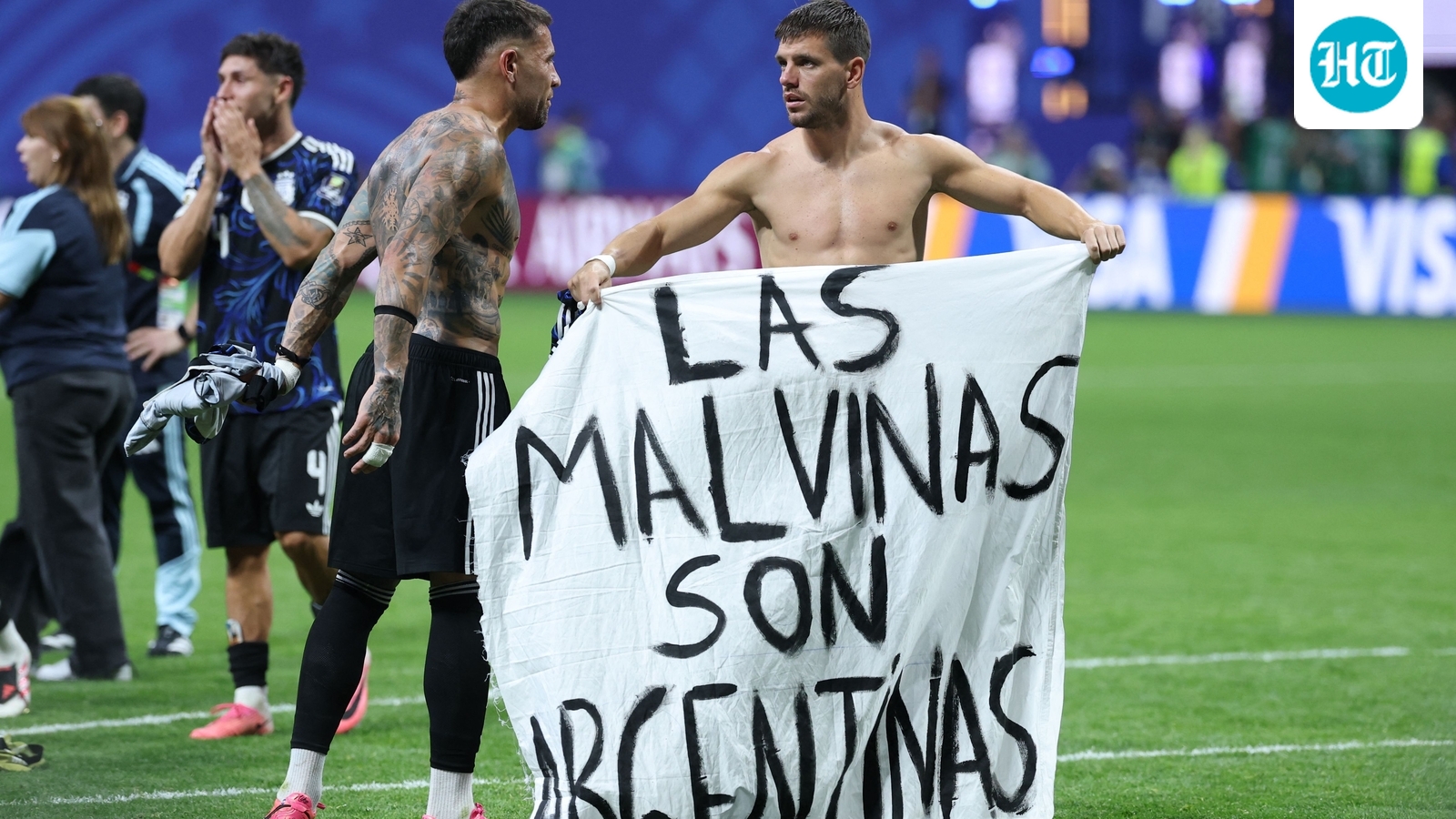
Argentina's dramatic 2-1 comeback over England in the 2026 World Cup semi‑final sparked a political controversy as players displayed a "Las Malvinas son Argentinas" banner. The incident revives memories of the 2014 fine and raises questions about potential disciplinary action under FIFA's strict stadium code.
Key Takeaways (मुख्य बिंदु)
- Argentina displayed a Malvinas banner after winning the semi‑final
- FIFA's 2026 Stadium Code prohibits political messages inside venues
- In 2014, the Argentine FA was fined £20,000 for the same slogan
On July 17, 2026, at Atlanta Stadium, Argentina overturned England 2‑1 to secure a place in the World Cup semi‑final. In the euphoria that followed, several players brandished a banner reading "Las Malvinas son Argentinas" – a direct claim that the Falkland Islands (known in Spanish as Las Malvinas) belong to Argentina. The message, steeped in a decades‑long sovereignty dispute with the United Kingdom, instantly turned a sporting triumph into a diplomatic flashpoint.
FIFA Regulations and Potential Breach
The 2026 FIFA World Cup Stadium Code of Conduct explicitly bans any political material inside official venues, covering banners, flags, clothing or any item deemed “political, offensive and/or discriminatory.” Likewise, the International Football Association Board (IFAB) stipulates that players' equipment must be free of political, religious or personal slogans. Violations can trigger sanctions, ranging from fines to competition bans. The precedent is clear: in 2014, the Argentine Football Association (AFA) was fined £20,000 (approximately $27,000) for a similar display, with FIFA labeling it a breach of “political activity” and “team misconduct.”
Historical Context of the Malvinas Claim
The Falkland Islands have been under British administration since 1833, yet Argentina has consistently asserted sovereignty, embedding the claim in its 1994 Constitution. The dispute erupted into a full‑scale war in 1982, resulting in 649 Argentine and 255 British casualties, before the UK re‑established control. In two referendums, the islanders voted overwhelmingly (99.8% in 2013) to remain a British Overseas Territory. This deep‑rooted contention resurfaces whenever Argentine athletes invoke the phrase, turning a sports arena into a stage for nationalistic expression.
Current Situation and FIFA's Likely Response
FIFA has not yet issued an official statement on the 2026 incident, but the governing body’s own regulations make it evident that disciplinary proceedings are possible. The uncertainty centers on whether the banner was introduced by the players themselves or handed over by supporters in the stands – a detail that could influence the severity of any sanction. Nonetheless, the existence of a clear rule against political messaging means that a repeat of the 2014 fine is plausible, potentially accompanied by additional penalties given the heightened global visibility of the World Cup.
Implications for Future Tournaments
Should FIFA impose sanctions, it would send a strong signal that political statements are not tolerated on the pitch, regardless of the emotional stakes involved. Such a move could reshape how national teams handle contentious issues, prompting stricter controls on fan‑generated content and player conduct. Moreover, it would reinforce the principle that sport should remain a neutral arena, even as geopolitical tensions continue to simmer beneath the surface.