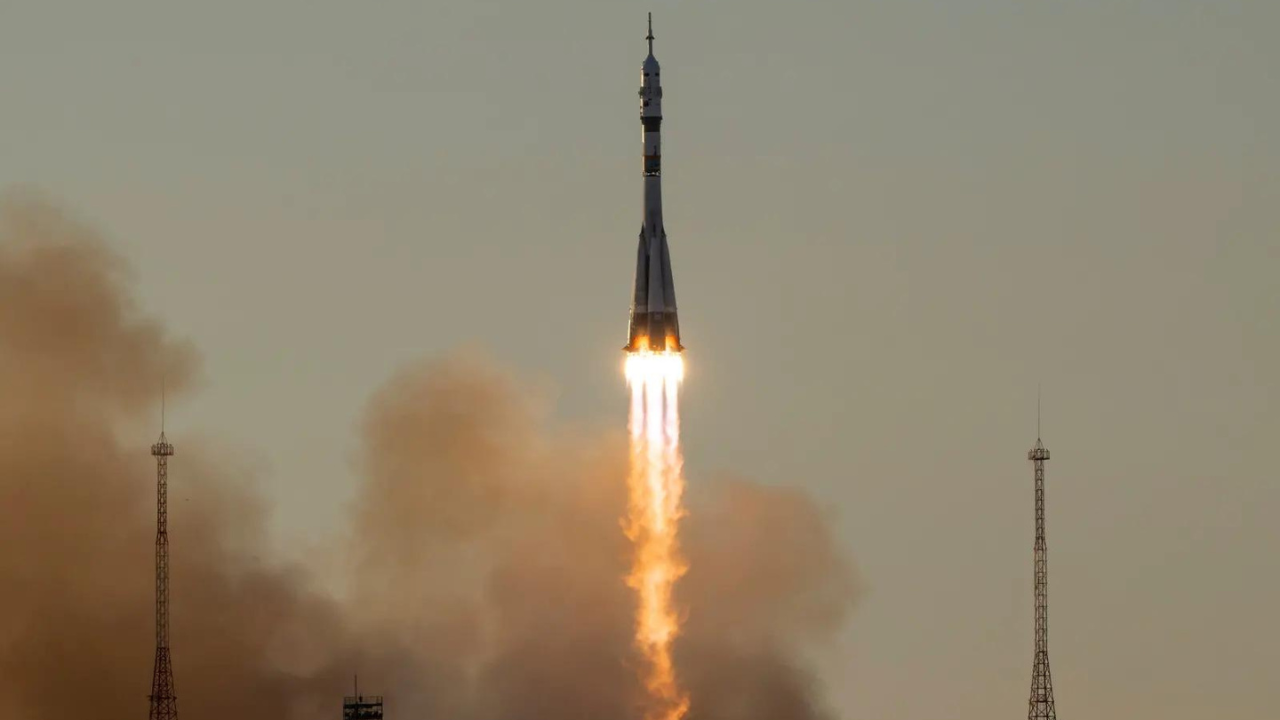
NASA astronaut of Indian origin Anil Menon launched on his inaugural spaceflight, set to spend eight months aboard the International Space Station. He will conduct experiments on human adaptation to microgravity and advance medical technologies, reinforcing NASA‑Roscosmos cooperation amid global tensions.
Key Takeaways
- Anil Menon becomes the first Indian‑origin astronaut to undertake an eight‑month stay on the ISS.
- The mission focuses on studying human physiological responses to microgravity and testing cutting‑edge medical technologies.
- It underscores continued NASA‑Roscosmos collaboration despite heightened geopolitical strains.
India’s space legacy includes trailblazers such as Rakesh Sharma, Kalpana Chawla, and Sunita Williams. Anil Menon, a veteran of NASA’s rigorous “George B. T. R. Class” training, adds a new chapter by heading to the International Space Station (ISS) on a Russian Soyuz‑FG launch. His eight‑month stint marks a milestone for the Indian diaspora in human spaceflight.
Mission Background and Strategic Significance
The Soyuz‑FG vehicle, launched from Baikonur Cosmodrome, reflects the enduring partnership between NASA and Roscosmos that began with the inception of the ISS in 1998. In an era of strained US‑Russia relations and regional conflicts, the mission demonstrates how scientific collaboration can transcend political discord, offering a template for future joint ventures.
Scientific Experiments and Technology Demonstrations
Menon’s primary agenda includes a suite of biomedical studies: bone density loss, muscle atrophy, and immune system modulation in microgravity. He will also pilot next‑generation bioprinting rigs, real‑time diagnostic devices, and AI‑driven health‑monitoring systems. These experiments aim to safeguard astronaut health on long‑duration missions and translate breakthroughs to terrestrial medicine.
Geopolitical Context of International Cooperation
Despite sanctions and diplomatic friction, NASA and Roscosmos have maintained a steady flow of crew exchanges, joint research, and shared infrastructure on the ISS. Menon’s flight reinforces the principle that space exploration remains a neutral ground where nations can collaborate for mutual benefit, even when terrestrial relations are fraught.
Implications for Future Space Endeavors
Successful outcomes could reshape protocols for deep‑space travel, particularly for Artemis lunar missions and eventual crewed journeys to Mars. Moreover, the mission’s visibility may inspire India’s burgeoning commercial space sector to pursue independent crewed capabilities, leveraging the expertise gained from such international missions.