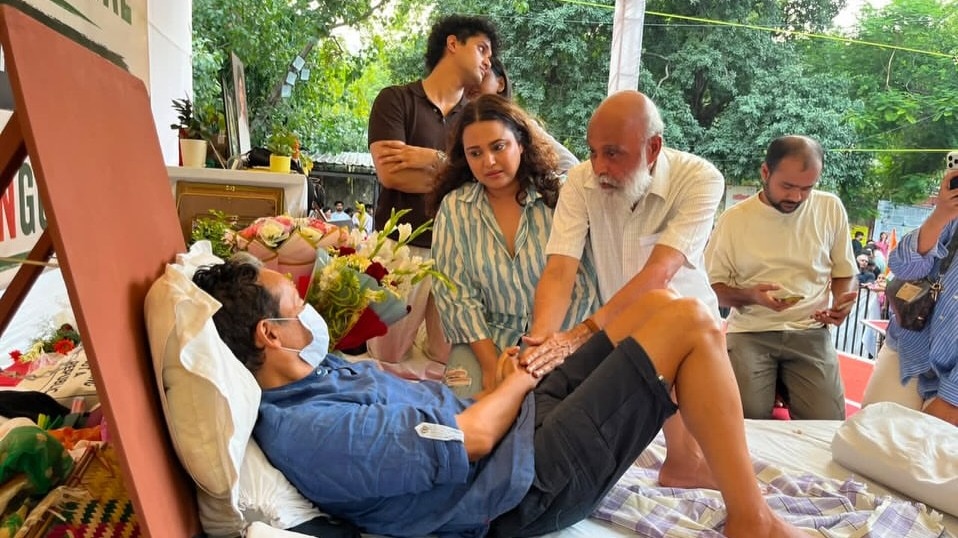
Actress Swara Bhasker visited Jantar Mantar on the 17th day of Sonam Wangchuk's hunger strike, expressing full support for his cause. Her appearance heightens concerns over the protester's health and intensifies calls for governmental accountability.
Key Takeaways (मुख्य बिंदु)
- Swara Bhasker met Sonam Wangchuk at Jantar Mantar on day 17 of his hunger strike.
- Wangchuk’s health is deteriorating, with muscle loss and severe pain reported.
- Public figures are urging the government to address alleged NEET irregularities and resignations.
On Tuesday, actress Swara Bhasker arrived at Jantar Mantar, New Delhi, where she met engineer‑activist Sonam Wangchuk and Cockroach Janata Party (CJP) founder Abhijeet Dipke. The meeting came on the 17th day of Wangchuk’s indefinite hunger strike, a protest sparked by alleged malpractice in the NEET examination.
Background of the Protest
Wangchuk began his fast on June 28, demanding the resignation of Union Education Minister Dharmendra Pradhan over claims of question‑paper leaks, biased evaluation, and other irregularities that threaten the future of millions of students. The CJP has turned the protest into a broader movement, drawing actors, writers, and scholars to amplify the call for transparency.
Swara’s Solidarity Message
Through an Instagram Story, Swara thanked Abhijeet for “fighting for the future of all our children” and praised Wangchuk as “the indefatigable Sir fighting for your children’s future.” Her post, shared by the CJP’s official account, highlighted the growing celebrity backing and placed additional pressure on the government.
Health Concerns and Government Response
Dipke’s recent X post warned that Wangchuk is losing muscle mass and experiencing intense pain, urging the authorities to engage in dialogue rather than asking him to end his fast. The health alarm has prompted a wave of statements from cultural icons such as Arundhati Roy, Naseeruddin Shah, Ratna Pathak Shah, and filmmaker Sanjay Kak, all calling for an immediate end to the hunger strike while still supporting the underlying cause.
Implications and Future Outlook
With a march to Parliament scheduled for July 20, the protest is evolving from a singular hunger strike into a potential catalyst for systemic reform in India’s education sector. If the government initiates a transparent inquiry and addresses the alleged NEET violations, it could defuse the escalating tension. Conversely, continued inaction may broaden the protest’s base, turning it into a lasting challenge for policymakers and a test of democratic responsiveness.