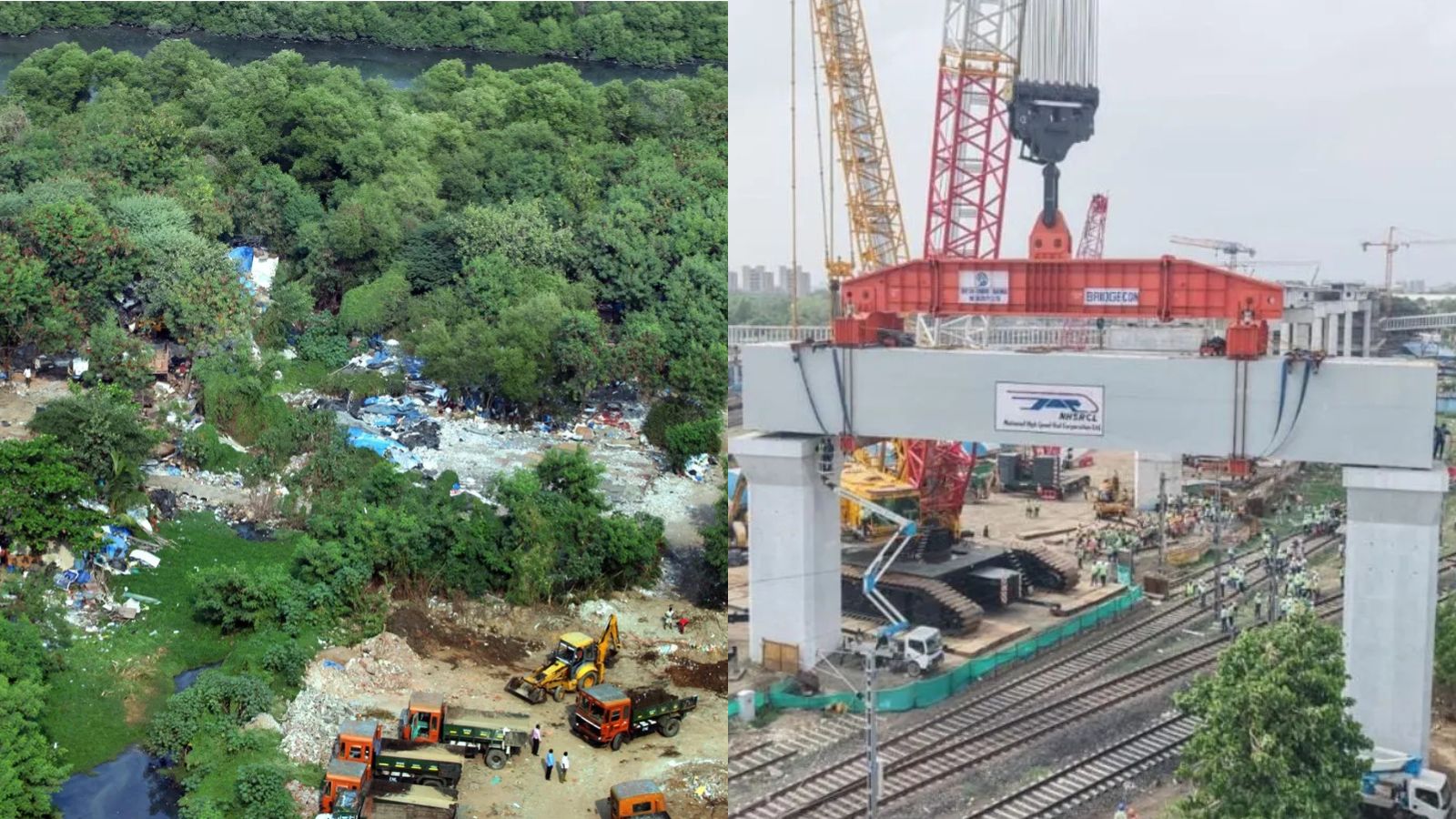
The Bombay High Court questioned the plan to cut down 847 mangrove trees for the Mumbai‑Ahmedabad bullet train and urged compensatory afforestation near the project site. The court highlighted potential air‑quality impacts, warning that city dwellers may one day need portable oxygen cylinders.
Key Takeaways
- 847 mangrove trees slated for removal for bullet‑train infrastructure
- High Court demands compensatory afforestation close to the affected area
- Potential oxygen scarcity could force Mumbai residents to use portable cylinders
The Bombay High Court on Tuesday scrutinised the proposal by Maharashtra State Electricity Transmission Company Ltd (MahaTransco) to clear 3.35 hectares of forest land—including 1.96 hectares of mangrove forest—in Palghar district for a 132 kV transmission line linked to the Mumbai‑Ahmedabad bullet‑train project.
Court’s Observation and Its Implications
Acting Chief Justice Ravindra V. Ghuge warned, “A day will not be far when Mumbaikars will have to carry oxygen cylinders on their backs to take intermittent shots of oxygen.” The remark underscores growing concerns over air‑quality degradation as mangroves disappear.
Current Status of Compensatory Afforestation
Advocate General Milind Sathe informed the bench that the required compensatory amount has already been deposited and that afforestation is being carried out in Solapur district. The court dismissed this as a “empty assurance,” arguing that planting trees 500 km away does not offset the ecological loss at the project site.
Why Mangroves Matter
Coastal mangroves act as carbon sinks, protect shorelines, and support marine biodiversity. Their removal not only threatens local ecosystems but also exacerbates Mumbai’s already strained air‑quality situation. Experts warn that without nearby re‑planting, the city could face measurable drops in ambient oxygen levels.
Recommendations for Future Projects
The bench urged authorities to initiate compensatory afforestation before any tree‑felling, ensuring that the replacement land is adjacent to the impacted zone. While recognising logistical challenges for ongoing projects, the judges emphasized that future infrastructure initiatives must embed local environmental mitigation as a core requirement.
The matter is scheduled for further hearing on July 20, with the court signalling that it will monitor the implementation of its recommendations closely.