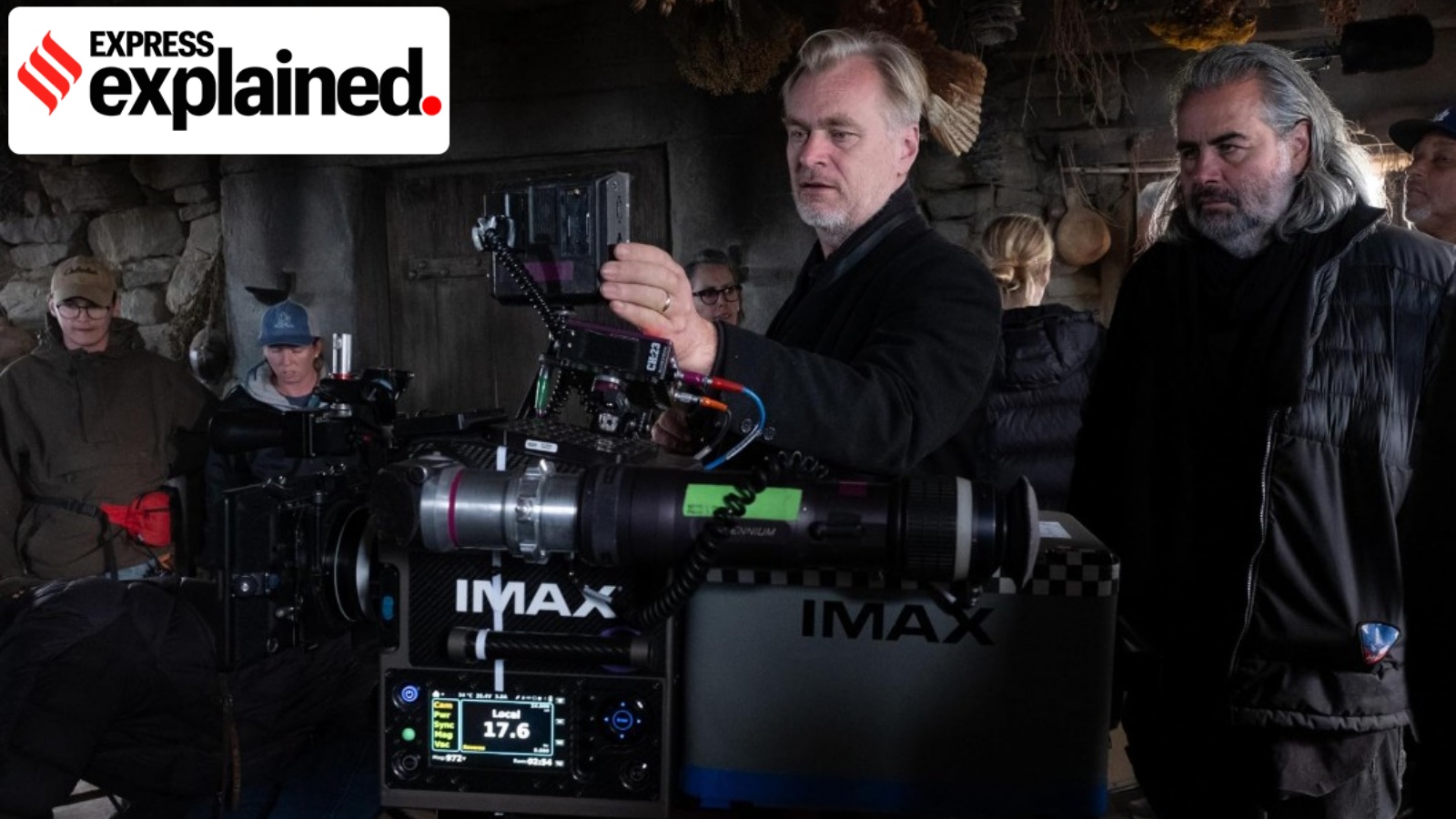
Christopher Nolan’s new film ‘The Odyssey’ will only be shown in its native 15/70mm IMAX format at 41 theatres worldwide, while India will screen only the digital version. This article explores the technical hurdles, post‑production intricacies, and the economic‑architectural constraints that keep the format out of Indian multiplexes.
Key Takeaways
- ‘The Odyssey’ can be projected in its original 15‑perforation/70 mm format at only 41 IMAX venues globally.
- India lacks commercial screens capable of handling this format; only digital prints will be exhibited.
- The film’s analog‑only post‑production pipeline drives up costs and logistical challenges.
Christopher Nolan shot ‘The Odyssey’ entirely on an IMAX camera, making it the first full‑length feature captured solely on 15‑perforation/70 mm film. This technical choice yields an image equivalent to roughly 18K resolution and a towering 1.43:1 aspect ratio, producing frames about ten times larger than a standard 35 mm frame.
What Makes the Format Unique?
The 15‑perforation/70 mm reel is 70 mm wide with 15 sprocket holes along its edge, allowing each frame to occupy a vastly larger physical area. The result is an image that is both taller and more detailed, delivering a near‑square visual field that differs sharply from the common rectangular cinema format.
Complex Post‑Production Process
The original colour negative (OCN) for ‘The Odyssey’ was hand‑spliced by FotoKem labs in Burbank, the only facility capable of handling such long 15‑perf/70 mm prints. After the raw footage left the set, it underwent chemical development, limited digital VFX edits, and then a return to analog for the final print. The finished reel weighs approximately 240 kg and requires a dedicated 68‑inch transport platter for safe handling.
Why It Won’t Appear in India
Indian multiplexes lack the specialized 68‑inch platters, dedicated IMAX projectors, and sound‑dampening enclosures needed for the massive 15/70 mm reels. Economically, a digital version is far more viable; existing IMAX screens can project the digital master without the prohibitive cost of transporting and maintaining the analog reels.
Implications for the Future
While Nolan’s experiment pushes the envelope of cinematic fidelity, its limited exhibition underscores the gap between artistic ambition and practical infrastructure. For India to host such formats, substantial investment in equipment and logistics would be required, otherwise audiences will continue to experience the film through its digital conversion, slightly diverging from the director’s original vision.