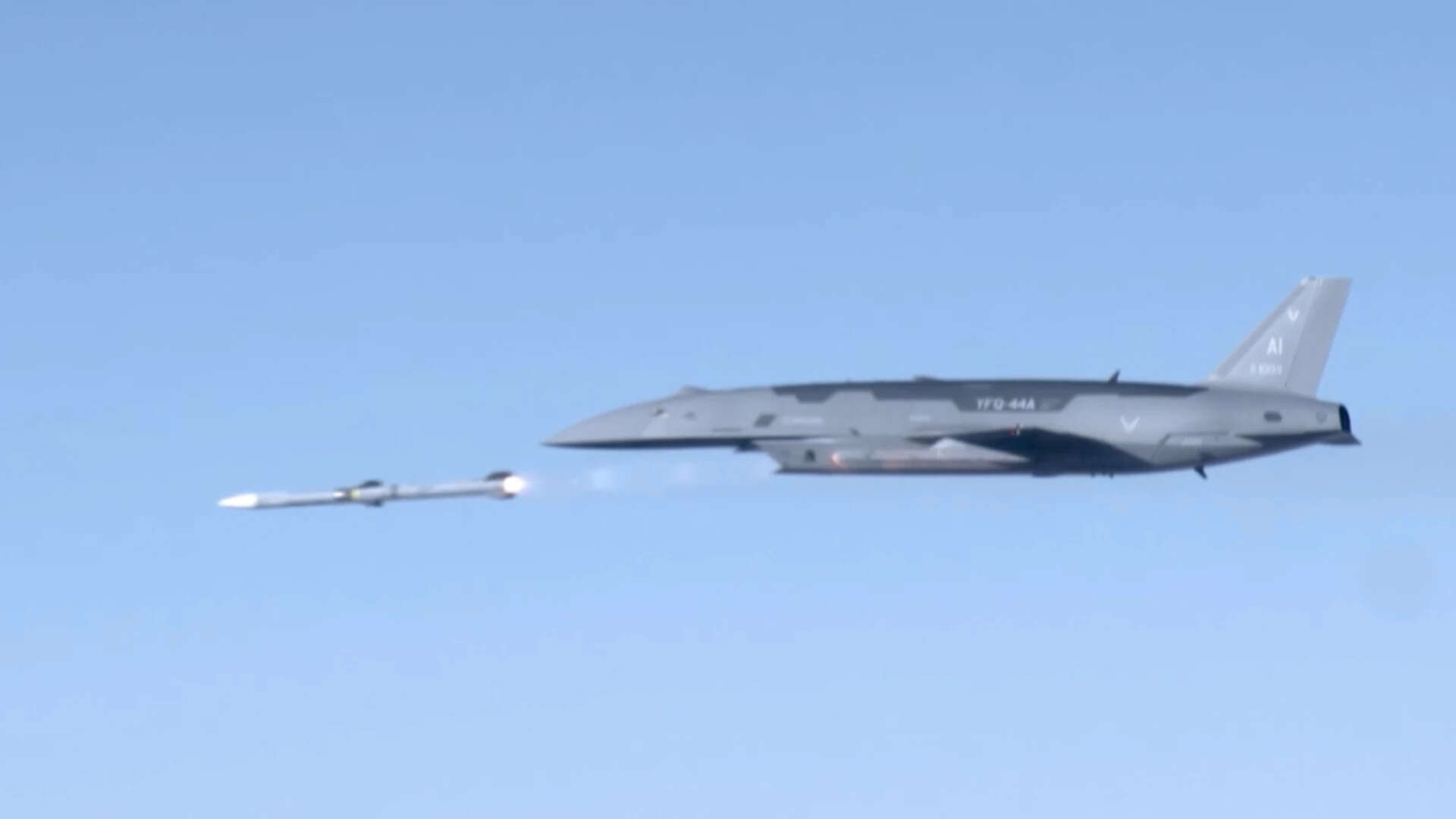
The US Air Force's YFQ-44A Fury drone has achieved a historic milestone by successfully firing its first live AMRAAM missile, signaling a shift toward autonomous air combat.
Key Takeaways
- The YFQ-44A Fury drone, developed by Anduril Industries, successfully completed its first live AIM-120 AMRAAM missile launch.
- This marks the first live-fire test for the US Collaborative Combat Aircraft (CCA) program.
- Anduril’s Lattice software enabled autonomous mission execution and target engagement.
- Global powers including India, Turkey, and Australia are aggressively developing similar unmanned combat capabilities.
The landscape of aerial warfare is undergoing a seismic shift. In a landmark demonstration of autonomous combat capability, the US Air Force’s YFQ-44A Fury drone, engineered by Anduril Industries, has successfully launched its first live AIM-120 Advanced Medium-Range Air-to-Air Missile (AMRAAM). Conducted at the Edwards Air Force Base in California, this test represents a pivotal moment for the Collaborative Combat Aircraft (CCA) program.
The Intelligence Behind the Machine
Unlike traditional remotely piloted aircraft, the Fury operates with a high degree of autonomy. The integration of Anduril’s Lattice software was central to this success, allowing the drone to ingest target data, execute mission parameters, and initiate the launch sequence autonomously within pilot-defined constraints. This capability ensures that the drone can function as a true 'unmanned wingman,' supporting crewed fighters by performing high-risk kinetic actions, electronic warfare, and reconnaissance missions.
A Global Arms Race in Autonomy
The successful test by the United States is part of a broader global trend where nations are racing to integrate artificial intelligence into their defense ecosystems. Turkey has already made strides with its Baykar Kızılelma drone, and Australia has demonstrated similar capabilities using the MQ-28 Ghost Bat in partnership with Boeing.
India is also positioning itself strategically through its stealthy Combat Air Teaming System (CATS) Warrior program. Once operational, the CATS system is designed to work in tandem with India's frontline fighters, including the Tejas, Sukhoi-30MKI, and Jaguar, significantly enhancing the survivability and striking power of the Indian Air Force.
The Future of Combat: Manned-Unmanned Teaming
The era of solo manned fighter dominance is evolving into an era of Manned-Unmanned Teaming (MUM-T). By deploying autonomous platforms like the Fury to fly ahead of manned aircraft, militaries can extend their sensor reach and create additional combat capacity while drastically reducing the risk to human pilots. As these technologies mature across air, land, and sea domains, the very definition of tactical superiority will be written in code and autonomous algorithms.