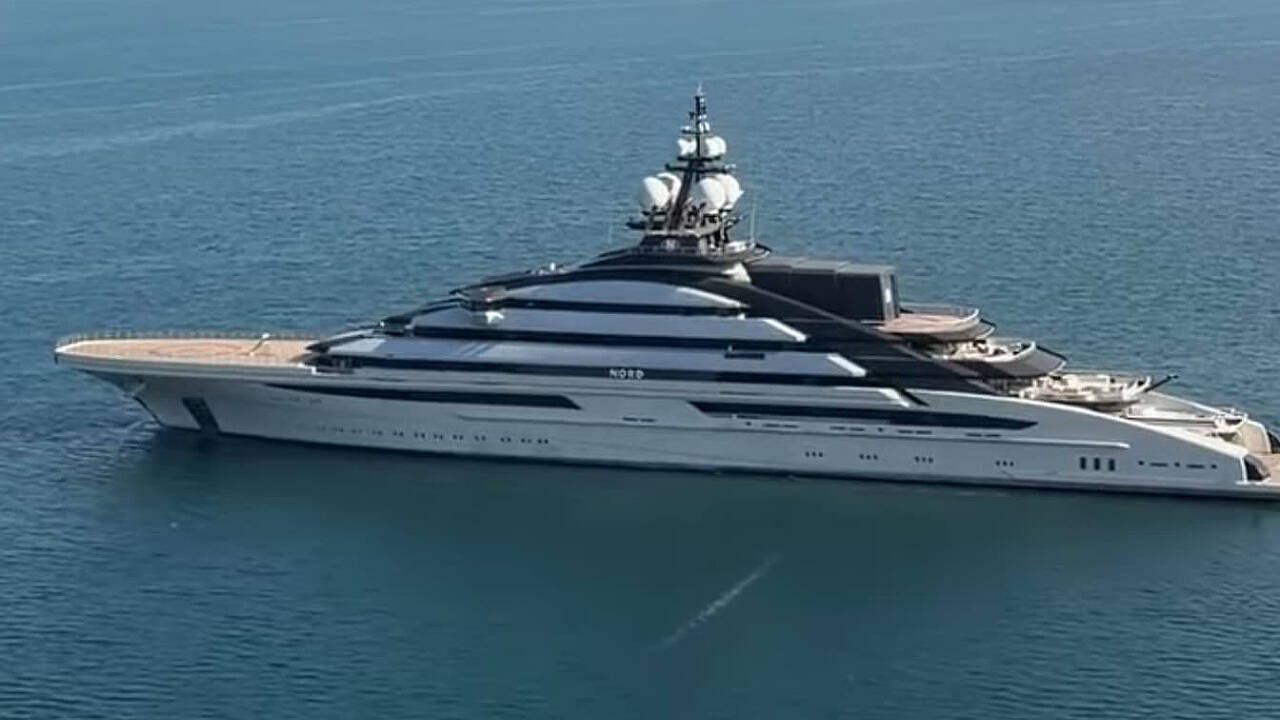
The 465‑foot luxury superyacht Nord, linked to Russian oligarch Alexey Mordashov, turned off its AIS in the perilous Strait of Hormuz and emerged in Bali after a 5,050‑mile voyage. Valued at $500 million, its annual operating cost is around $50 million.
मुख्य बिंदु (Key Takeaways)
- Nord disabled AIS to disappear from public tracking in the Strait of Hormuz
- Traveled roughly 4,400 nautical miles across the Indian Ocean
- Docked at Bali's commercial Benoa Harbor after the covert journey
Russia’s richest steel magnate, Alexey Mordashov, is linked to the 465‑foot (142‑metre) superyacht Nord, which performed a high‑tech ‘vanishing act’ in one of the world’s most contested maritime chokepoints. When the vessel was spotted near the Strait of Hormuz in late April, its crew reportedly switched off the Automatic Identification System (AIS) transponder, rendering the yacht invisible to all public tracking platforms.
How the Vanishing Technology Works
The AIS combines GPS and radio transmitters to continuously broadcast a ship’s identity, location, speed and heading. By cutting this feed, Nord eliminated its digital footprint, allowing it to traverse the strait unnoticed—a maneuver especially bold given the heightened geopolitical tensions that have left many commercial vessels hesitant to enter the waterway.
Extensive Oceanic Voyage
After disappearing from the Hormuz region, Nord embarked on a roughly 4,400‑nautical‑mile (about 5,050‑mile) journey across the Indian Ocean, departing from Dubai and eventually anchoring at the commercial port of Benoa in Bali, Indonesia. The yacht’s massive 345,000‑liter fuel tanks were refilled during its stay, and the vessel required a crew of more than 40 to manage its operations.
Design, Luxury and Capabilities
Delivered by Germany’s renowned Lürssen shipyard in 2021, Nord is widely recognized as one of the most advanced private explorer yachts on the planet. Weighing in at 10,154 gross tons, it can accommodate up to 36 guests in 20 ultra‑luxury cabins. Amenities include two functional helipads, a private swimming pool, spa, gym, cinema room, a custom‑built submarine, and an extensive collection of water toys.
Financial Implications and Strategic Significance
Estimated at $500 million, operating a superyacht of this scale typically costs about 10 % of its value each year—roughly $50 million for crew salaries, maintenance, fuel and other expenses. The ability to silence AIS in a high‑risk corridor underscores both the financial muscle behind the vessel and the strategic intent to evade surveillance, raising questions about the enforcement of maritime regulations amid sanctions and geopolitical friction.
Nord’s covert passage highlights a growing tension between private luxury assets and international security frameworks, suggesting that regulators may need to rethink monitoring mechanisms for high‑value vessels that can simply “go dark” when navigating contested waters.


