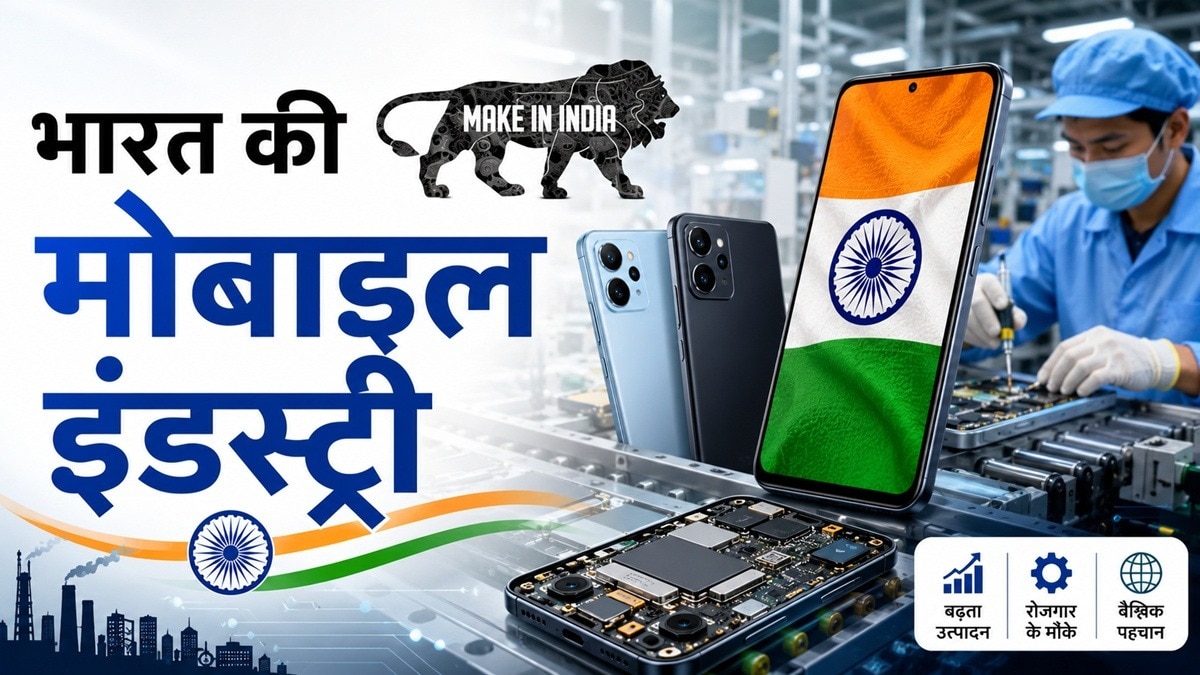
The Indian government has greenlit the Mobile Phone Manufacturing Scheme (MPMS) with a massive budget of ₹62,500 crore to scale up domestic smartphone production. Replacing the previous PLI scheme, this initiative aims to position homegrown Indian mobile brands on the global stage.
Key Takeaways
- The Union Cabinet has approved the MPMS scheme with a ₹62,500 crore budget over 5 years.
- This new program replaces the PLI-LSEM scheme, which concluded on March 31, 2026.
- Domestic Indian brands will receive an additional 3% sales incentive to foster local R&D and design.
- The scheme targets a massive ₹39 lakh crore production output and aims to create 60,000 direct jobs.
In a decisive bid to establish India as a global electronics powerhouse, the Union Cabinet, chaired by Prime Minister Narendra Modi, has approved the groundbreaking Mobile Phone Manufacturing Scheme (MPMS). Backed by a monumental financial outlay of ₹62,500 crore, the scheme is designed to catalyze deep manufacturing and elevate 'Made in India' mobile brands to global prominence. Alongside this, the government has also greenlit ₹1.26 lakh crore for the Semicon-2 scheme, reinforcing India's semiconductor ambitions.
The Strategic Evolution: Transitioning from PLI to MPMS
The MPMS scheme is structured to run over a five-year tenure. It strategically replaces the Production Linked Incentive for Large-Scale Electronics Manufacturing (PLI-LSEM), which officially wound down on March 31, 2026. While the previous PLI framework succeeded in establishing India as the world's second-largest mobile manufacturer by volume, the MPMS shifts the focus from mere assembly to high-value component localization and intellectual property creation.
A Multi-Tiered Incentive Structure
To foster a self-sustaining ecosystem, the MPMS introduces a highly calibrated incentive structure. Mobile manufacturers operating in India will receive incentives ranging from 2.25% to 5% on incremental sales. Furthermore, to encourage local sourcing, companies that procure key components and sub-assemblies domestically will receive an additional 1.5% incentive. Crucially, to bridge the technological gap, indigenous Indian brands will be granted an additional 3% incentive on sales specifically earmarked for investment in design, research, and development (R&D).
Macroeconomic Impact and Employment Generation
Through this policy push, the government envisions scaling India’s mobile phone manufacturing output to an astronomical ₹39 lakh crore, significantly boosting the country's export ledger. The scheme is projected to generate over 60,000 direct jobs, offering high-tech employment opportunities to India's burgeoning engineering talent. Since the financial year 2014-15, India’s electronics manufacturing has grown seven-fold, and exports have surged eleven-fold, proving that the sector is the primary engine of the nation's manufacturing GDP.
The Tri-Fold Structure of India's Mobile Ecosystem
Today, India's mobile manufacturing landscape comprises three distinct layers. First are the Contract Manufacturers like Foxconn (manufacturing for Apple), Tata Electronics, and Dixon Technologies. Dixon, a premier Indian contract manufacturer, handles assembly for giants like Xiaomi, Motorola, and Samsung. Second are the Global Brands like Samsung, Oppo, and Vivo, which operate their own massive production facilities in India. The third, and arguably most crucial tier for national interest, consists of Homegrown Brands like Lava, which stand to benefit immensely from the design-focused incentives of the MPMS.