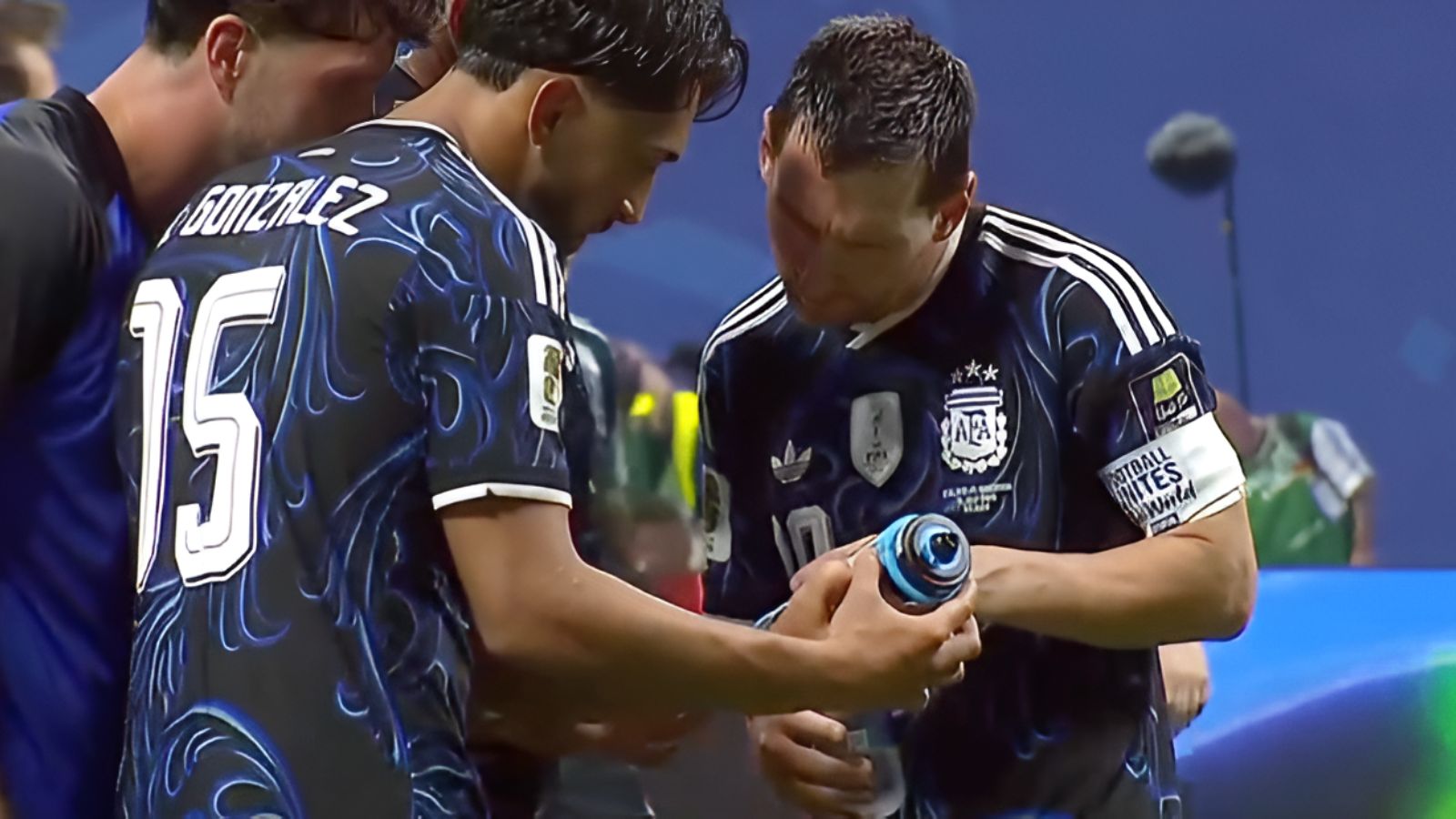
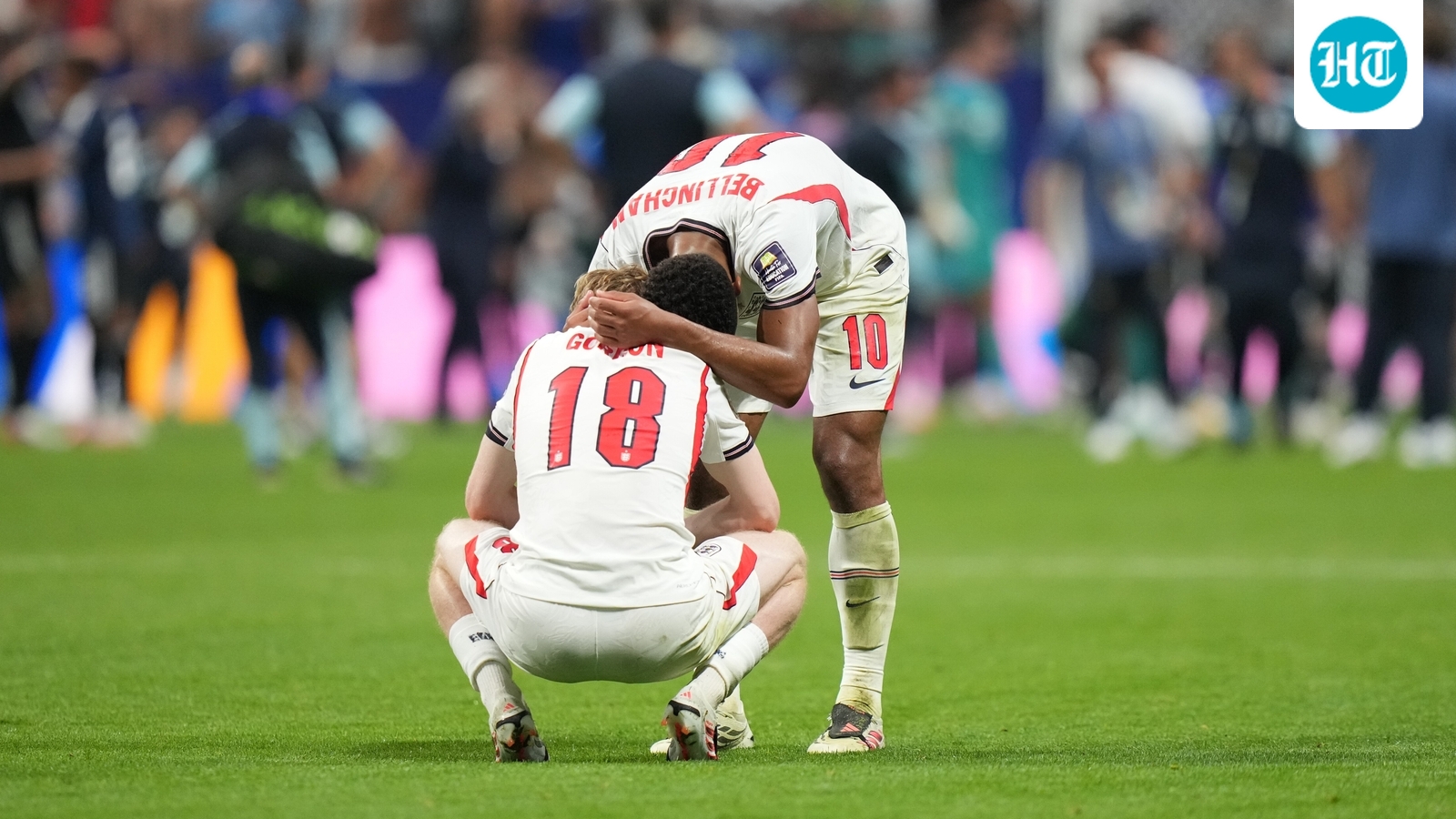
Following their dramatic 2-1 semifinal victory over England at the 2026 FIFA World Cup, Argentine players sparked controversy by displaying a political banner claiming sovereignty over the Falkland Islands.
Key Takeaways
- Argentine players brandished a 'The Malvinas are Argentine' banner after defeating England 2-1.
- FIFA's Stadium Code of Conduct strictly prohibits any political, offensive, or discriminatory displays.
- The sovereignty of the Falkland Islands remains a deeply sensitive diplomatic issue between the UK and Argentina.
ATLANTA: In the wake of a thrilling 2-1 semifinal victory over England at the 2026 FIFA World Cup, Argentine players have triggered a major geopolitical controversy. During the post-match celebrations, defenders Lisandro Martinez and midfielder Giovani Lo Celso were seen holding a banner that read "Las Malvinas Son Argentinas" ("The Falklands are Argentine"), directly challenging FIFA's strict neutrality regulations.
Violation of FIFA's Code of Conduct
FIFA’s Stadium Code of Conduct explicitly bans "banners, flags, flyers, apparel and other paraphernalia that are of a political, offensive, and/or discriminatory nature" inside stadiums. The governing body of world football has not yet issued an official response regarding potential disciplinary actions against the Argentine Football Association (AFA) or the individual players involved, but pressure is mounting for an investigation.
The Historic Falklands Conflict
The sovereignty dispute over the South Atlantic archipelago—known to the British as the Falkland Islands and to Argentines as Las Malvinas—has been a long-standing diplomatic sore. In 1982, the two nations fought a brief but bloody conflict over the territory, resulting in the deaths of 649 Argentine soldiers and 255 British service members. While Britain secured victory and the islanders overwhelmingly voted to remain a British Overseas Territory, Argentina continues to claim historical inheritance of the islands from Spain dating back to 1816.
Sports and Politics Collide Once Again
This incident is not the first time political tensions have spilled onto the pitch during the tournament. Earlier in the World Cup, Iranian-American fans waved pre-revolutionary flags in Los Angeles as a symbol of protest against the Tehran regime. However, direct political statements by active players on the pitch present a much more complex challenge for FIFA, which consistently strives to keep international football free from diplomatic warfare.