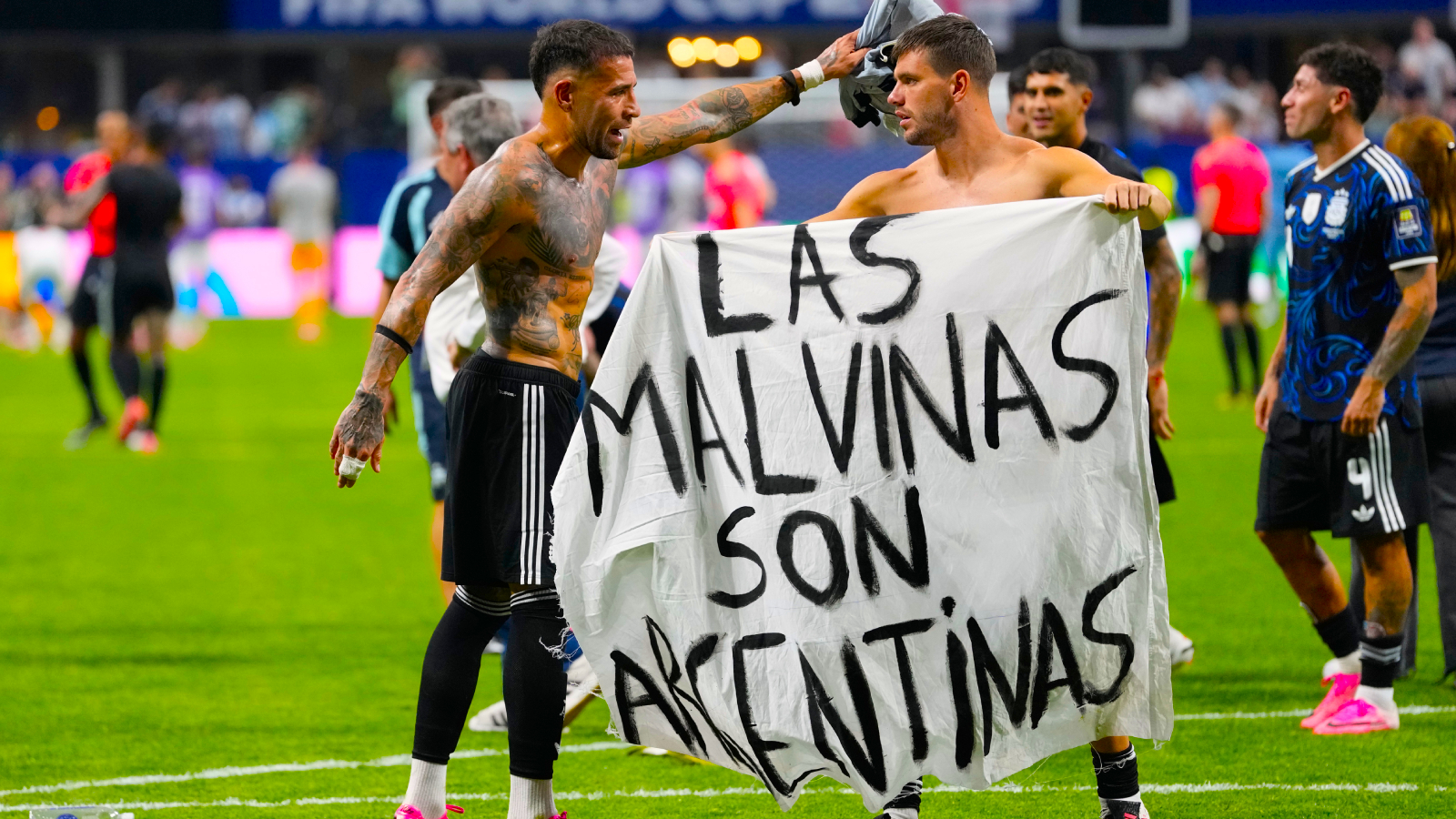
Argentina clinched a 2-1 victory over England to book a World Cup final spot, while players unfurled a ‘Las Malvinas son Argentinas’ banner, reviving the historic Falklands dispute. The political gesture risks breaching FIFA’s conduct rules.
मुख्य बिंदु (Key Takeaways)
- Argentina defeated England 2-1 to secure a World Cup final berth.
- Players displayed a banner reading “Las Malvinas son Argentinas,” referencing the Falkland Islands.
- The banner may contravene FIFA’s rules against political messaging.
On July 15, 2026, at Atlanta’s Mercedes Benz Arena, Argentina overturned a 1‑0 deficit to win 2‑1 against England in the World Cup semi‑final. After Anthony Gordon’s early goal, Enzo Fernández equalised with a long‑range strike, and Lautaro Martínez headed the winning goal in the first minute of extra time, sending Argentina to a final showdown with Spain.
Political Statement After the Match
In the post‑match celebration, Giovani Lo Celso and Nicolas Otamendi brandished a banner that read “Las Malvinas son Argentinas” – “The Falkland Islands are Argentine.” The message harks back to the 1982 74‑day war that claimed 649 Argentine and 255 British lives, a trauma still vivid in both nations.
FIFA’s Conduct Code and Potential Sanctions
FIFA’s code of conduct explicitly bans political, divisive, or offensive content on and off the field. By displaying a politically charged banner, Argentina risks disciplinary action, especially after Argentine Security Minister Alejandra Monteoliva prohibited fans from bringing Falklands‑related flags to the semi‑final.
Reactions from Both Sides
Britain’s consul‑general in Atlanta, Rachel Galloway, indicated that Argentine supporters may continue chanting about the Malvinas alongside legends Diego Maradona and Lionel Messi, emphasizing a desire for “working together” despite the political overtones. Argentine officials, meanwhile, framed the banner as an assertion of national identity, underscoring the islands’ symbolic importance.
Implications for Future Tournaments
If FIFA refrains from imposing penalties, this episode could set a precedent for political expression on the world stage, blurring the line between sport and geopolitics. Conversely, stricter enforcement could signal a new era of vigilance, ensuring that future tournaments remain focused on the game rather than historic disputes.