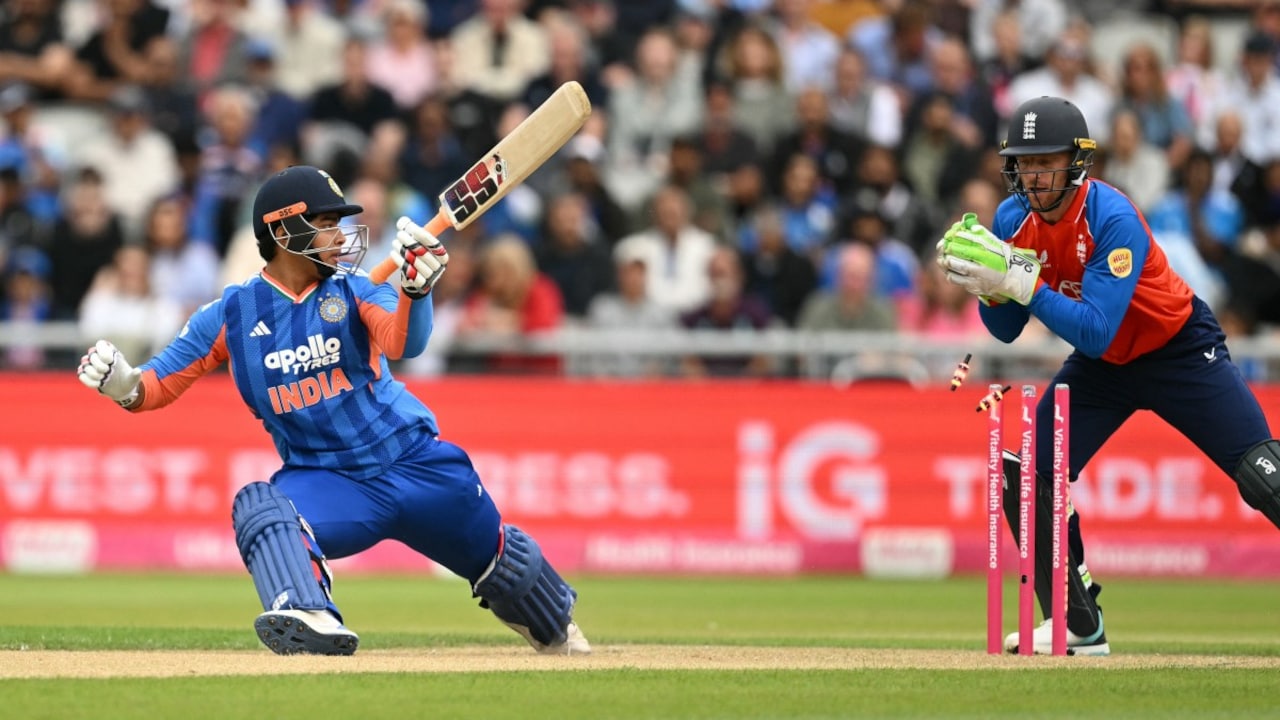
Former India assistant coach Abhishek Nayar has advised against labeling teenage sensation Vaibhav Sooryavanshi's recent form as a 'problem,' emphasizing the need for mental support.
Key Takeaways
- Former assistant coach Abhishek Nayar advocates for patience with teenage batter Vaibhav Sooryavanshi.
- The advice follows India's underwhelming T20I campaign against England.
- Nayar warns that viewing temporary form slumps as 'problems' can damage young talent.
In the wake of India's lackluster T20I series against England, the spotlight has shifted from team tactics to the mental fortitude of its rising stars. Former Indian assistant coach Abhishek Nayar has stepped forward to defend teenage batting prodigy Vaibhav Sooryavanshi, urging stakeholders to exercise extreme caution in how they perceive the young player's recent performance dip.
The Perils of Early Criticism
Nayar's comments come at a sensitive time for Indian cricket, where the transition between generations is in full swing. Addressing the scrutiny surrounding Sooryavanshi, Nayar remarked, "You don't want him to see it as a problem." This nuanced perspective highlights a growing concern in modern cricket: the psychological impact of rapid-fire criticism on adolescent athletes who are still navigating the complexities of international-level pressure.
Contextualizing the England Series
India's recent campaign against England was characterized by inconsistent batting performances and a struggle to adapt to high-intensity T20I dynamics. While critics have been quick to point fingers at individual failures, Nayar suggests that the focus should instead be on long-term development. For a player of Sooryavanshi's caliber, the ability to weather storms is as crucial as his ability to hit boundaries. The coaching staff and selectors are being urged to provide a protective cocoon rather than a magnifying glass.
Building a Sustainable Talent Pipeline
The debate surrounding Sooryavanshi touches upon a broader strategic question for the BCCI: How do we balance the hunger for immediate results with the necessity of nurturing long-term talent? As India looks toward future ICC tournaments, the management of young players' confidence will likely be the deciding factor between a fleeting success and a sustained era of dominance. Developing a player like Sooryavanshi requires an ecosystem that values growth over immediate statistics.