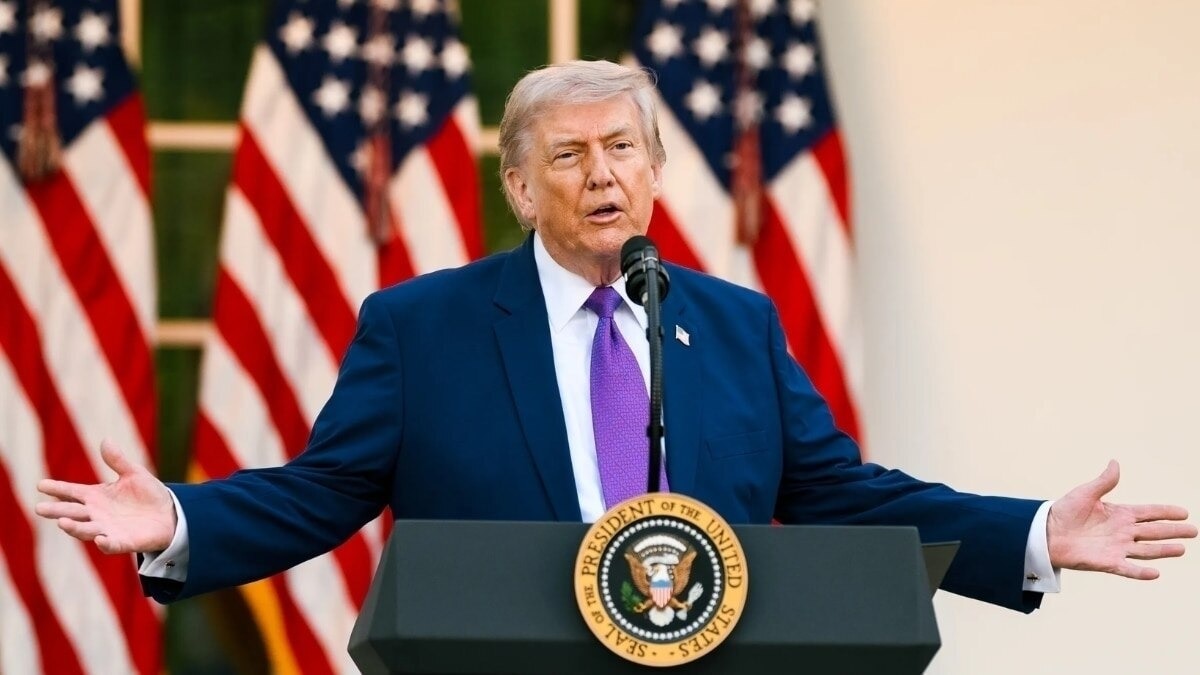
President Donald Trump alleged today that China illicitly obtained personal data of 22 crore American voters during the 2020 election. He questioned the performance of federal agencies and demanded sweeping electoral reforms to restore public confidence.
Key Takeaways
- Trump claims China stole data of 22 crore US voters
- Voter rolls allegedly contain non‑citizens and deceased individuals
- Trump pressures FBI, CIA, DHS for a thorough investigation
United States President Donald Trump used his national address to level a serious allegation – China allegedly pilfered the personal information of 22 crore American voters during the 2020 presidential election. The claim, framed as the most massive breach of electoral security in U.S. history, has instantly amplified an already volatile political climate.
Historical Context
After Trump’s defeat in the 2020 election, a chorus of conservative allies and the former president himself repeatedly raised concerns about foreign interference, especially from China and Russia. While official investigations have not substantiated large‑scale tampering, this fresh proclamation revives the narrative that undisclosed intelligence exists.
Details of the Alleged Data Theft
According to Trump, Chinese operatives accessed voter names, addresses, phone numbers, and even political preferences. He suggested that Beijing created a dedicated “data‑harvesting unit” to infiltrate state and local election databases. If verified, the breach would dwarf all previous cyber‑espionage incidents targeting U.S. elections.
Accusations Against Federal Agencies
Trump cited a Department of Homeland Security (DHS) review that identified 278,000 non‑citizens registered as voters, and warned that many Democrat‑run states have withheld voter‑registration data, inflating the true figure. He further accused the FBI, CIA, and the Office of the Director of National Intelligence (ODNI) of colluding with a so‑called “deep state” to suppress the findings, thereby denying the American public critical security information.
Policy Directions Proposed
The former president urged Congress to fast‑track the “SAFE America Act,” which would make citizenship proof mandatory for every voter and restrict mail‑in ballots to narrowly defined circumstances such as illness, disability, military deployment, or travel. Trump argues these measures will restore voter trust and fortify America against future data breaches.
Security experts caution that, should the allegation hold water, it could reshape not only U.S. diplomatic relations but also global data‑protection standards. Lawmakers on both sides of the aisle are now gearing up for intense hearings, with expectations of a rigorous bipartisan investigation.