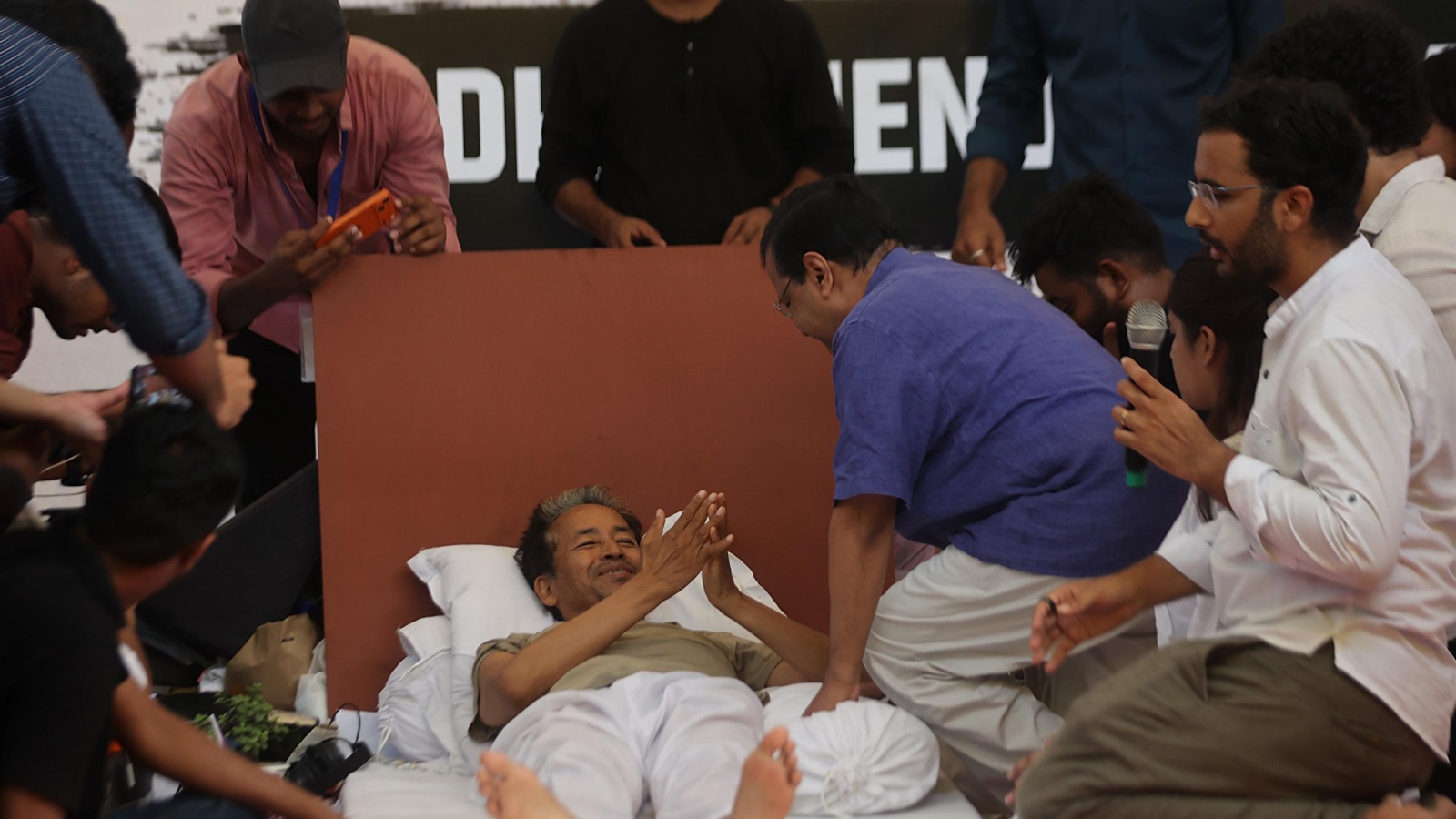
On the 19th day of Sonam Wangchuk's hunger strike, opposition parties gathered at Delhi's Jantar Mantar, calling for the resignation of Union Education Minister Dharmendra Pradhan. AAP, Congress, SP, National Conference and regional leaders joined forces, signalling a broad political backlash against exam paper leaks.
मुख्य बिंदु (Key Takeaways)
- Opposition coalition backs Sonam Wangchuk's protest
- Calls intensify for Education Minister Dharmendra Pradhan's resignation
- Repeated exam paper leaks erode public trust in meritocracy
As activist Sonam Wangchuk entered the 19th day of his fast, Delhi’s Jantar Mantar turned into a crucible of opposition unity. Arvind Kejriwal, national convenor of the Aam Aadmi Party (AAP) and former Delhi chief minister, stood beside Wangchuk, demanding that Prime Minister Narendra Modi replace Education Minister Dharmendra Pradhan with the activist.
Cross‑Party Support
While the Congress had initially remained silent, it soon voiced its solidarity, with General Secretary (Organisation) K.C. Venugopal stating that the party shares Wangchuk’s “anguish and outrage” over the lack of accountability in the BJP‑led government. Jammu & Kashmir Chief Minister Omar Abdullah, Samajwadi Party MP Dimple Yadav, and Kerala’s opposition leader Pinarayi Vijayan also publicly endorsed Wangchuk’s cause, targeting the Centre for systemic failures.
Exam Paper Leaks as a National Crisis
Kejriwal framed the recurring leaks of competitive exam papers as a crisis of public faith in meritocracy. Drawing on his own experience of qualifying for the IIT entrance when leaks were unheard of, he warned that today’s youth are losing confidence that hard work can outweigh privilege. He cited the 2024 NEET leak, noting that the mastermind obtained bail and that more than 20 students committed suicide in its aftermath.
Parallels with Past Movements
Recalling the 2011 Anna Hazare anti‑corruption protest that also unfolded at Jantar Mantar, Kejriwal warned that governmental arrogance can no longer be tolerated. “Three years after that movement, the government fell,” he said, implying that sustained public pressure could force a reshuffle of the education ministry.
Political Implications
Wangchuk’s protest has transcended a single issue; it has become a rallying point for parties seeking to challenge the Modi government’s handling of education policy. If the demand for Pradhan’s resignation is not met, the opposition’s coordinated front could reshape electoral dynamics ahead of the next general elections.