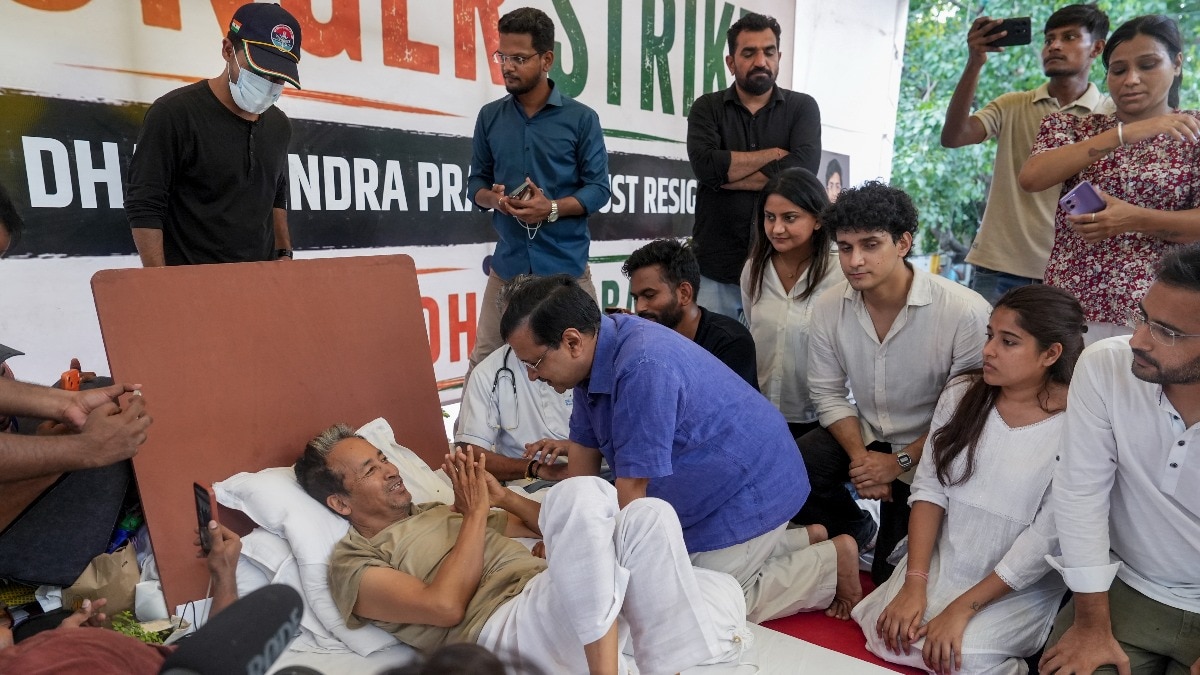
AAP national convener Arvind Kejriwal joined Sonam Wangchuk’s protest at Jantar Mantar, urging the central government to heed youth demands and warning of a 2014‑like political fallout if ignored.
मुख्य बिंदु (Key Takeaways)
- Kejriwal joins Sonam Wangchuk’s hunger strike at Jantar Mantar.
- Calls for Education Minister Dharmendra Pradhan’s resignation and proposes Wangchuk as his replacement.
- Delhi High Court orders daily medical monitoring of Wangchuk’s health.
Arvind Kejriwal, national convener of the Aam Aadmi Party (AAP), stood beside climate activist Sonam Wangchuk at Jantar Mantar on Thursday, marking the 19th day of the latter’s indefinite hunger strike. Kejriwal warned the Centre that ignoring the youth‑led movement could bring about a political scenario similar to the 2014 elections, where the ruling party faced massive backlash.
Background of the Protest
Wangchuk’s fast began in response to alleged irregularities in the 2026 NEET‑UG examination, including a high‑profile paper‑leak controversy. He demands greater transparency in the national competitive exams, stricter security protocols, and a revamp of education policy that reflects the aspirations of today’s students. The protest quickly gained traction, with thousands of young aspirants gathering at Jantar Mantar to amplify his voice.
Kejriwal’s Political Warning
During his address, Kejriwal launched a sharp criticism of the central government, stating, “Listen to the youth, the movement, and Sonam Wangchuk; otherwise, three years later you will meet a 2014‑like fate.” He further demanded the resignation of Union Education Minister Dharmendra Pradhan and suggested that Wangchuk be appointed as the new Education Minister, positioning the protest as a catalyst for broader political change.
Judicial Intervention
The Delhi High Court, recognizing the health risks of a prolonged fast, ordered that Wangchuk’s condition be clinically monitored every day. A division bench comprising Chief Justice Devendra Kumar Upadhyaya and Justice Tejas Karia emphasized that “the life of every citizen is precious” and directed that any medical intervention recommended by government doctors be provided without delay. This order came after a public‑interest litigation highlighted concerns over Wangchuk’s deteriorating health.
Future Outlook
If Kejriwal’s demands are met, India could see a major reshuffle in the education ministry, potentially ushering in reforms on exam security, curriculum design, and climate‑centric education. Conversely, a dismissive stance by the government may deepen youth disillusionment, influencing upcoming electoral dynamics. The episode underscores the growing intersection of education policy, climate activism, and political accountability in India.