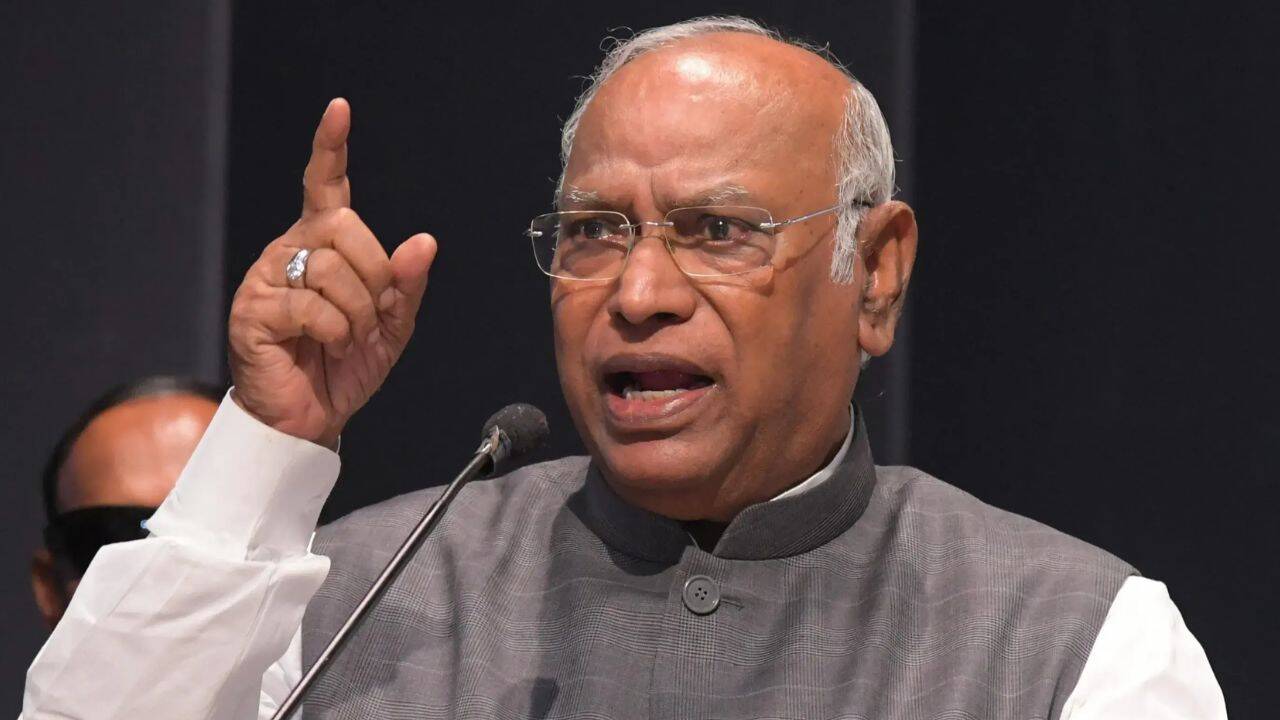
Congress president Mallikarjun Kharge wrote to Prime Minister Narendra Modi seeking an all‑party meeting to examine the revised Constitution (131st Amendment) Bill. He warned that the government is poised to reintroduce the delimitation bill and urged that the opposition be given adequate time to study the proposal.
मुख्य बिंदु (Key Takeaways)
- Kharge asks Modi to convene an all‑party meeting on the delimitation bill.
- The government is preparing to re‑introduce the bill in the Monsoon session.
- Congress claims the ruling coalition lacks the two‑thirds majority required for a constitutional amendment.
New Delhi: Congress president Mallikarjun Kharge penned a formal letter to Prime Minister Narendra Modi on July 17, requesting an all‑party discussion on the revised Constitution (131st Amendment) Bill, commonly referred to as the delimitation bill. The appeal comes amid media reports that the government intends to bring the bill back before Parliament during the upcoming Monsoon session.
Political Context and Recent Developments
The delimitation bill was defeated in the Lok Sabha on April 17, with opposition parties arguing that it was disguised as a women’s reservation measure while actually aiming to redraw constituency boundaries based on population—a move projected to benefit the BJP and disadvantage southern states. Kharge had previously sought a similar meeting during the Budget session from the Minister of Parliamentary Affairs, but the request was ignored.
Congress Strategy and Coalition Dynamics
Kharge’s letter reflects a broader Congress strategy to coordinate with all parties that opposed the April vote, including the DMK, NCP and SP, in order to consolidate opposition against a re‑introduced bill. The party maintains that the Modi government still falls short of the two‑thirds majority needed for any constitutional amendment, especially after the split of the TMC and Shiv Sena.
Potential Implications and Expert Views
Should the delimitation bill be re‑presented, it could trigger a major reshuffle of India’s parliamentary representation. Redrawing seats based on current population data may reduce the number of seats for the South while increasing them for the North, altering the balance of regional power. Constitutional scholars warn that any such sweeping change must secure a broad consensus to preserve democratic legitimacy.
Next Steps and Political Calculus
Kharge urged Modi to share the bill’s details with the opposition and allow sufficient time for scrutiny before it is tabled. Ignoring this appeal could intensify political friction and lead to heated debates in the forthcoming session. Meanwhile, Congress and its allies are mobilising legal and parliamentary tactics to block the bill’s passage.