The Maharashtra government has approached the Bombay High Court seeking permission to allow the immersion of PoP idols exceeding 6 feet in natural water bodies until a recycling solution is found.
Key Takeaways
- Maharashtra seeks HC permission for immersing 6ft+ PoP idols in natural water bodies.
- The state argues CPCB's 2020 guidelines are advisory, not mandatory prohibitions.
- A long-term recycling solution for Plaster of Paris (PoP) is currently being sought.
- Environmental activists are pushing for a complete ban to prevent water pollution.
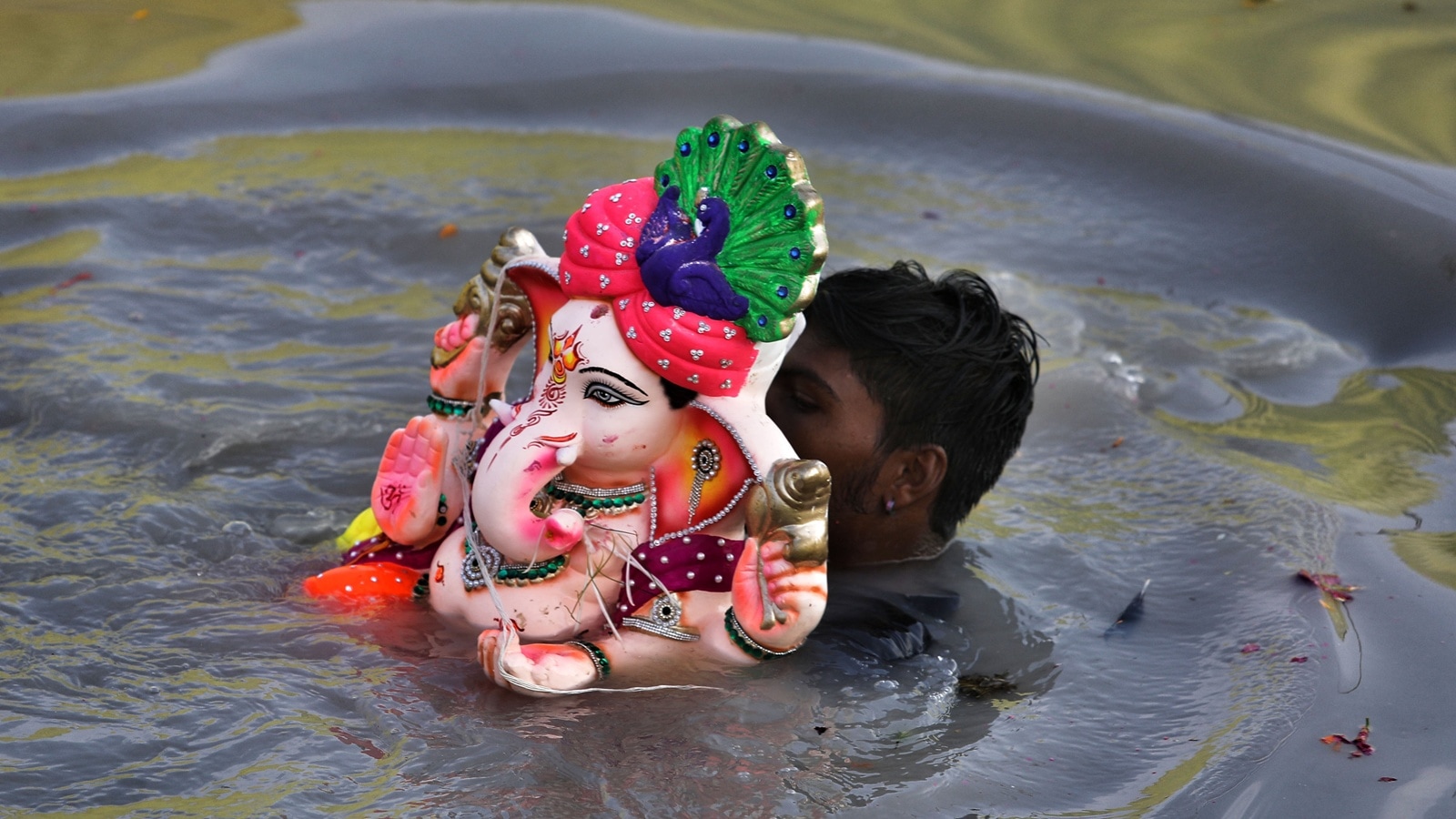
As the festive season of Ganeshotsav approaches, a significant legal battle is unfolding in the Bombay High Court. The Maharashtra government has formally requested the court's permission to continue the immersion of large Plaster of Paris (PoP) idols—specifically those exceeding six feet in height—into natural water bodies such as rivers, lakes, and the sea. The state contends that this relaxation is necessary until a viable, long-term recycling mechanism for PoP material is established.
The Legal Stand on CPCB Guidelines
In a recent affidavit, Ramesh Mahale, Joint Secretary in the Environment Department, clarified the state's position. The government argued that the Central Pollution Control Board (CPCB) guidelines issued in 2020 are 'advisory' in nature and do not constitute a legal prohibition against the manufacture or immersion of PoP idols. This stance is a direct response to a Public Interest Litigation (PIL) that seeks a total ban on the immersion of large-scale PoP idols to protect aquatic ecosystems.
Environmental Concerns vs. Cultural Heritage
The conflict highlights the growing tension between ecological preservation and religious tradition. Senior advocate Mihir Desai, representing the petitioners, argued that the current guidelines are impractical and that allowing massive PoP structures to dissolve in water bodies causes irreparable damage to water quality. The petitioners maintain that the state's failure to strictly implement CPCB norms contributes directly to worsening pollution levels in Maharashtra's water bodies.
Proposed Mitigation and Future Outlook
To balance these interests, the state government has pointed toward its August 1, 2025 guidelines. Under these rules, idols larger than six feet can only be immersed in natural water bodies if no alternative artificial facilities are available. Furthermore, the state mandates that the material must be collected, scientifically disposed of, and the water body must be cleaned post-immersion. The government maintains that its awareness campaigns are successfully shifting the public towards eco-friendly clay idols, but a temporary concession for large public mandals remains a necessity for now.