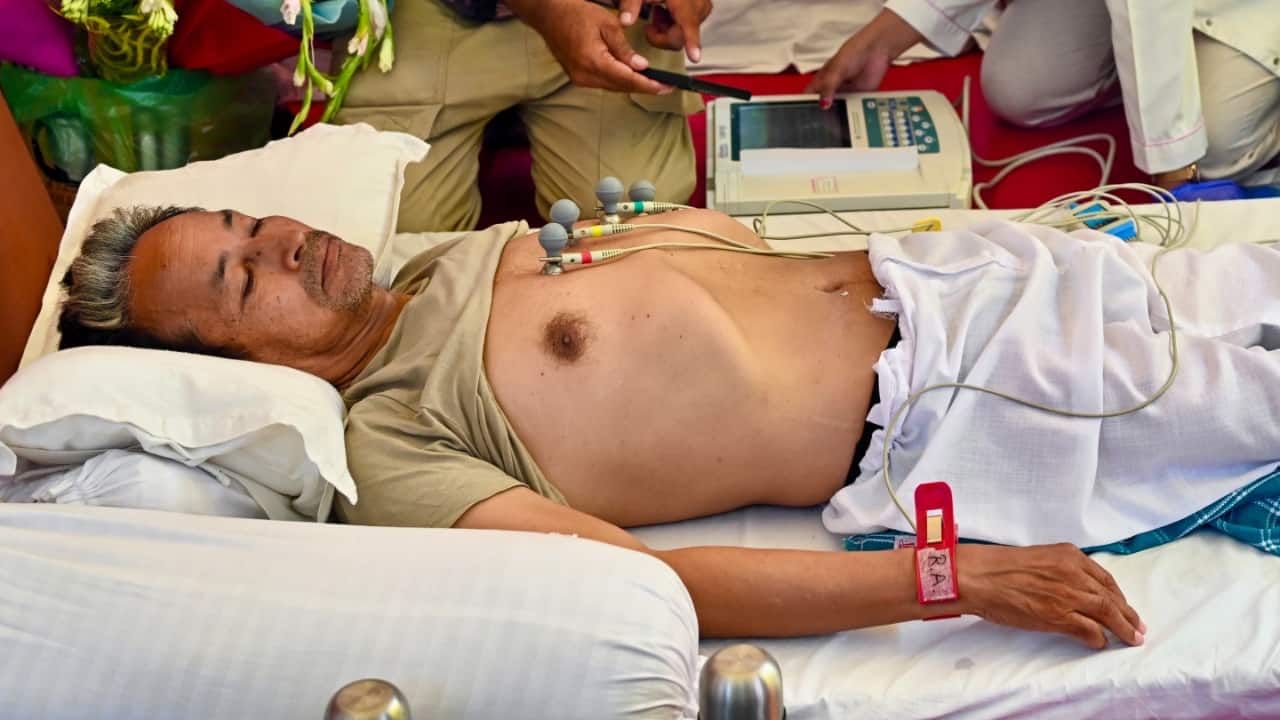
Emphasizing that "every life is precious," the Delhi High Court has directed daily government medical monitoring for climate activist Sonam Wangchuk on his 19th day of hunger strike. The court disposed of a PIL after receiving firm assurances from the Central government regarding timely clinical assessments.
Key Takeaways
- The Delhi High Court intervened on the 19th day of activist Sonam Wangchuk's indefinite hunger strike.
- The court ordered daily government medical monitoring to prevent irreversible organ damage.
- The Bench emphasized the state's constitutional obligation to safeguard human life under Article 21.
In a major judicial intervention, the Delhi High Court declared that the "life of every individual is precious" and ordered that government medical teams monitor the health of fasting climate activist Sonam Wangchuk on a daily basis. The Division Bench, comprising Chief Justice Devendra Kumar Upadhyaya and Justice Tejas Karia, disposed of a Public Interest Litigation (PIL) after receiving categorical assurances from the Central government that proper medical aid and timely clinical assessments will be administered to safeguard the activist's life.
'Every Life is Precious': High Court Stresses State Obligation
During the urgent hearing, the Bench emphasized the constitutional duty of the state to protect human life, noting that all necessary medical arrangements must remain accessible. "We would like this person to be regularly medically checked by government doctors, and, depending on the report of the doctors, if any medication is required, please intervene. Every life is precious," the Bench observed orally while recording the state's consensus. The PIL, moved by advocate Rakesh Kumar Saini, had raised alarm over Wangchuk's rapid physical deterioration at the Jantar Mantar protest site, highlighting massive weight loss and volatile blood sugar drops.
Deep Background: The Battle for Ladakh's Autonomy
Sonam Wangchuk’s fast is the latest escalation in a long-standing movement demanding constitutional safeguards for the Union Territory of Ladakh. Activists and local leaders have been demanding Ladakh's inclusion under the Sixth Schedule of the Indian Constitution, which grants autonomous administrative powers to tribal areas. Since the reorganization of Jammu and Kashmir in 2019, which turned Ladakh into a Union Territory without a legislature, concerns have grown over the protection of its fragile Himalayan ecology, indigenous land rights, and unique cultural identity from unregulated industrial exploitation.
Judicial Precedents on Hunger Strikes and Civil Liberties
Indian jurisprudence has historically maintained a delicate balance regarding the right to protest and the state's duty to preserve life under Article 21 of the Constitution. While peaceful dissent is a fundamental right, the state is legally obligated to prevent self-harm or loss of life during prolonged fasts. By ordering daily medical checks rather than forcefully terminating the protest, the Delhi High Court has sought a middle path—safeguarding the activist’s physiological stability while respecting his democratic right to raise voice against ecological and political marginalization.