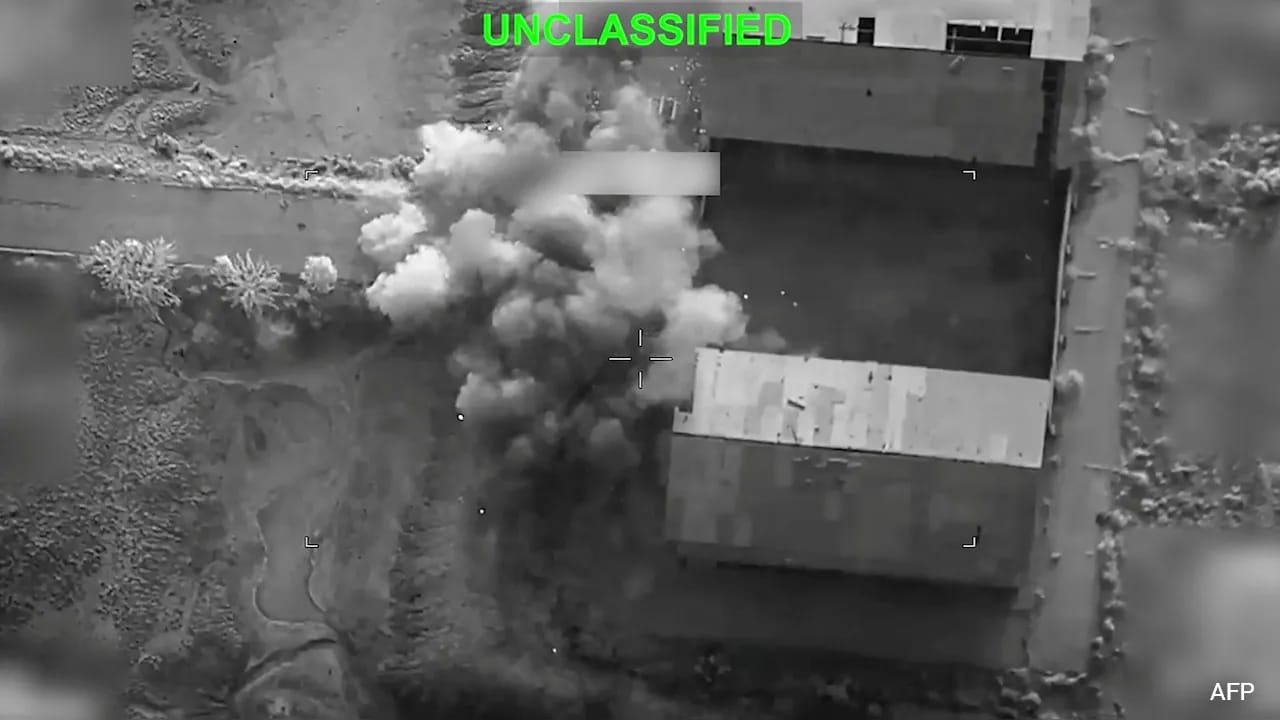
The United States has significantly expanded its airstrike campaign against Iran, targeting strategic bridges and naval facilities near the Strait of Hormuz to cripple Tehran's logistics.
Key Takeaways
- The US military has expanded its strikes to target critical bridges and logistics infrastructure in Iran.
- Key targets included Qeshm Island and Bandar Abbas, home to Iran's largest port and IRGC naval facilities.
- The strikes come as part of President Trump's strategy to pressure Iran regarding the Strait of Hormuz.
- Iran has responded with missile attacks on US-allied nations, signaling a risk of full-scale regional escalation.
The conflict in West Asia has entered a volatile new phase. On Friday, July 17, 2026, the United States significantly escalated its military campaign against Iran, moving beyond purely military installations to strike vital civilian and strategic infrastructure. By targeting key bridges and logistics networks, the US aims to sever the movement of supplies and pressure the Iranian government to relinquish its influence over the Strait of Hormuz, a global maritime chokepoint.
Targeting the Naval Heart of Iran
According to the US Central Command (CENTCOM), the latest wave of strikes—the sixth consecutive night of intense operations—hit high-value targets near Qeshm Island and Bandar Abbas. Bandar Abbas is not merely a commercial hub; it serves as the nerve center for Iran's navy and the Islamic Revolutionary Guard Corps (IRGC). By striking these maritime capabilities and coastal surveillance sites, the US seeks to neutralize Iran's ability to disrupt international shipping lanes.
Escalation and Humanitarian Concerns
The impact of these strikes has been profound. Reports indicate that the strikes near Tehran and the Semnan province—a critical zone for Iran's ballistic missile and space programs—have caused significant disruption. The escalation has also brought a humanitarian dimension to the conflict, with reports of hospitals being evacuated due to the proximity of strikes. Iran has condemned the actions as 'barbaric' and has retaliated by launching missile strikes against US-allied nations in the region, warning of further escalation.
Geopolitical Implications
This shift in tactics, moving toward the destruction of national infrastructure, marks a significant hardening of the US stance under the Trump administration. The strategic focus on bridges and ports suggests an intent to induce economic and logistical paralysis within Iran. As the tension intensifies around the Strait of Hormuz, the global community faces the looming threat of a wider regional war that could devastate global energy markets and international security.