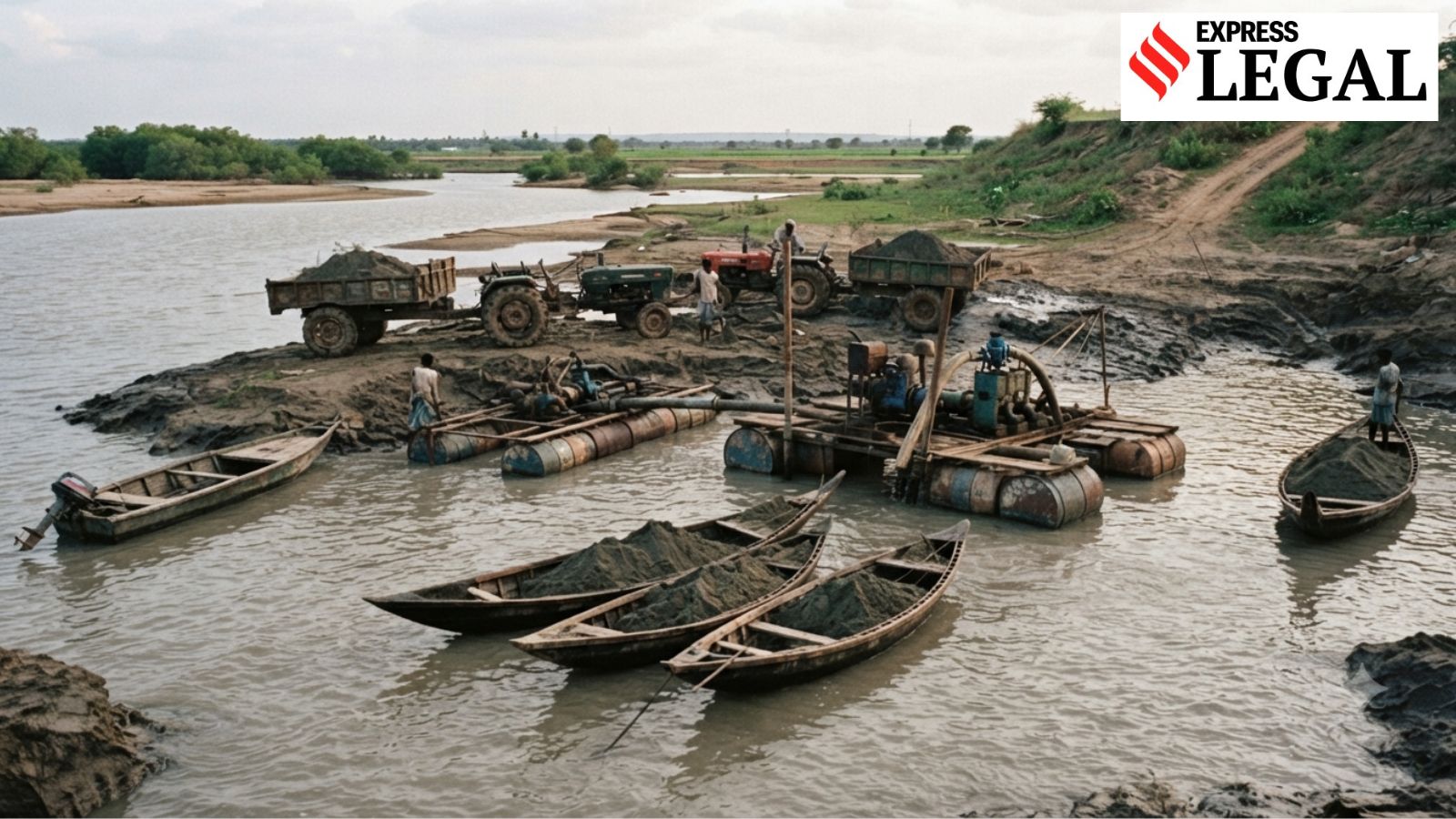
Citing religious reverence and the Public Trust Doctrine, the Andhra Pradesh High Court has quashed orders allowing contractors to excavate sand from village ponds for a National Highway project.
Key Takeaways
- The Andhra Pradesh High Court invalidated orders permitting sand excavation from village ponds in Vizianagaram.
- The Court highlighted the sacred status of water in Hinduism, Islam, and Christianity.
- The ruling reinforces the 'Public Trust Doctrine,' naming the State as a trustee of natural resources.
- The decision protects vital water bodies essential for agriculture and groundwater recharge.
In a landmark judgment that merges legal principles with spiritual values, the Andhra Pradesh High Court has set aside official orders that allowed National Highway contractors to excavate sand and gravel from village ponds in the Vizianagaram district. Justice Maheswara Rao Kuncheam ruled that public infrastructure projects cannot serve as a pretext to bypass essential mining laws and environmental safeguards.
A Convergence of Faith and Law
The judgment stands out for its profound recognition of how major world religions view water. Justice Kuncheam observed that water is not merely a commodity but a life-sustaining resource revered across faiths. He noted that in Hinduism, rivers are worshipped as divine entities; in Islam, water is viewed as a divine gift that must be protected from waste; and in Christianity, it symbolizes purification and renewal. The court bridged these religious sentiments with the legal Doctrine of Public Trust, stating that water is a common heritage entrusted to humanity for equitable use across generations.
The Legal Breach and Local Impact
The dispute arose from the NH-130CD economic corridor project. Local farmers from Kothapalem village challenged the 2022 orders issued by the District Collector, which permitted contractors to source materials from the Kannamnaidu pond. This pond is critical to the region, providing irrigation for nearly 2,000 acres of land. The court found that the administration bypassed the Mines and Minerals (Development and Regulation) Act, 1957, failing to follow mandatory legal procedures for mineral extraction.
Constitutional Mandate for Conservation
Relying on the precedent set in the landmark M.C. Mehta vs. Kamal Nath case, the High Court reaffirmed that the State acts as a trustee of natural resources like rivers, lakes, and forests. The bench emphasized that environmental protection is an integral part of the Right to Life under Article 21 of the Constitution. Furthermore, the court invoked Articles 48A and 51A(g), reminding both the State and its citizens of their constitutional duty to protect the environment and natural resources for future generations.