From the Congress of Vienna to the Palace of Versailles, explore how Europe established itself as the ultimate stage for high-stakes international negotiations.
Key Takeaways
- The Congress of Vienna (1814-15) institutionalized diplomacy as a mechanism for conflict management.
- Europe's role evolved from managing 'Balance of Power' to providing 'Perceived Neutrality.'
- Locations like Geneva and Versailles continue to serve as the preferred stages for global powers to negotiate.
The recent geopolitical shifts, including the fragile ceasefire dynamics between the United States and Iran, have once again highlighted a persistent reality in international relations: Europe remains the indispensable stage for high-stakes diplomacy. Whether it is negotiations held in Geneva or the signing of a Memorandum of Understanding at the Palace of Versailles, the continent's role as a diplomatic sanctuary is unparalleled.
Historical Genesis: The Congress of Vienna
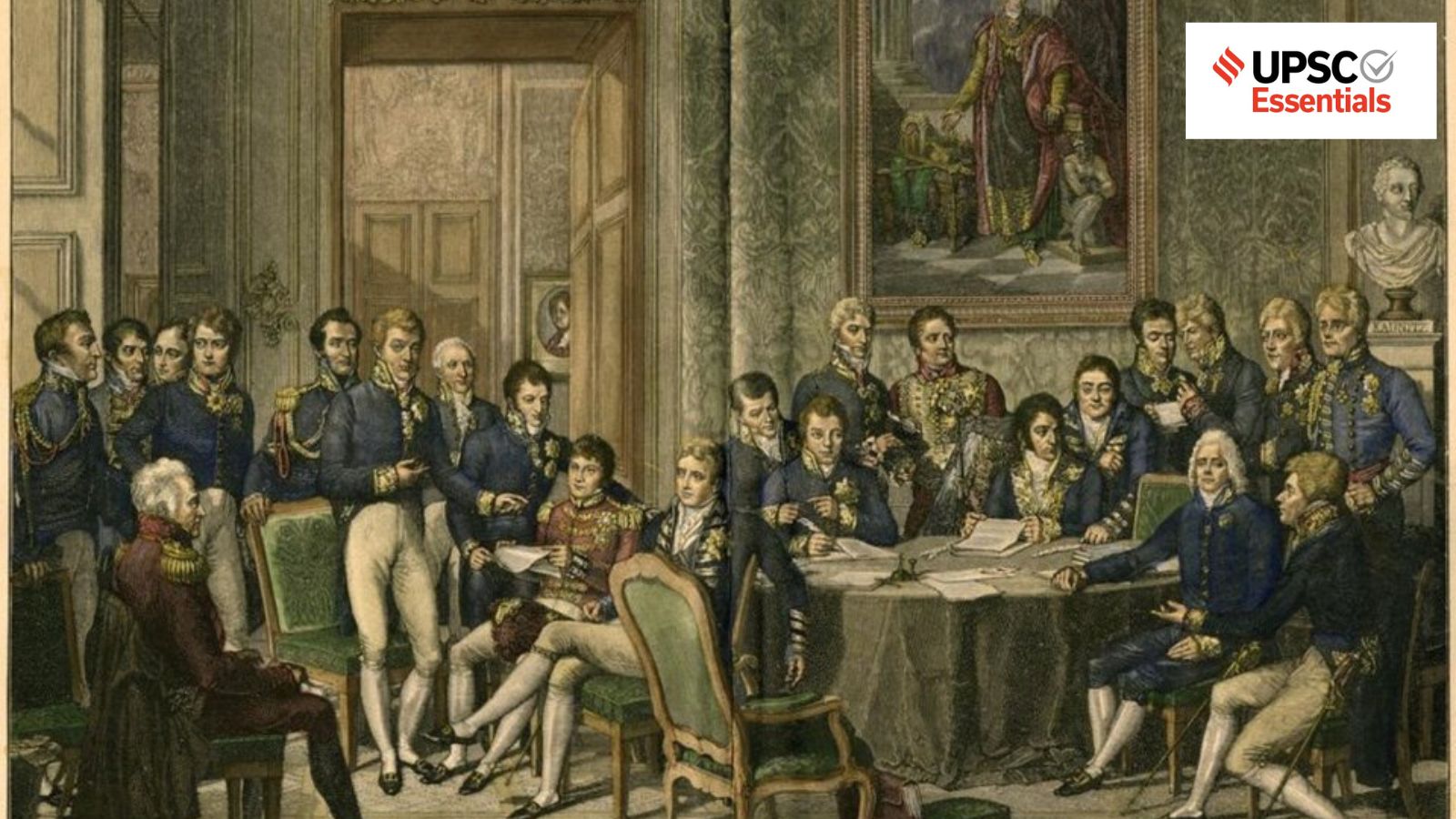
Europe’s diplomatic dominance is not a product of recent trends but a legacy born out of exhaustion. Following the devastating Napoleonic Wars, the Congress of Vienna (1814-15) sought to move beyond mere peace treaties. It aimed to create a systematic framework known as the Concert of Europe. This was a sophisticated 'balance-of-power' architecture designed to manage rivalries among great powers like Austria, Prussia, Russia, and Britain, ensuring that unilateral ambitions did not lead to systemic collapse.
The Evolution of Mediation: Neutrality as an Asset
As the nature of conflict evolved from interstate wars to nationalist movements and colonial struggles, Europe's mediation model underwent a critical transformation. While the 'Concert' focused on great-power equilibrium, a secondary tradition emerged based on the perceived neutrality of mediators. Nations such as Switzerland, Norway, and Austria leveraged their lack of strategic self-interest to build identities as trusted third parties. Switzerland, in particular, turned its recognized neutrality into an active diplomatic instrument, making it the world's premier venue for mediation.
Enduring Significance in a Multipolar World
In a modern era characterized by shifting alliances and complex non-state actor conflicts, the European model of diplomacy remains vital. The ability to provide a 'value-neutral' framework and a physical space where conflicting parties can meet without immediate strategic baggage is what keeps cities like Geneva at the forefront of global peace efforts. As long as the world requires structured engagement to prevent escalation, Europe's diplomatic architecture will remain central to global stability.