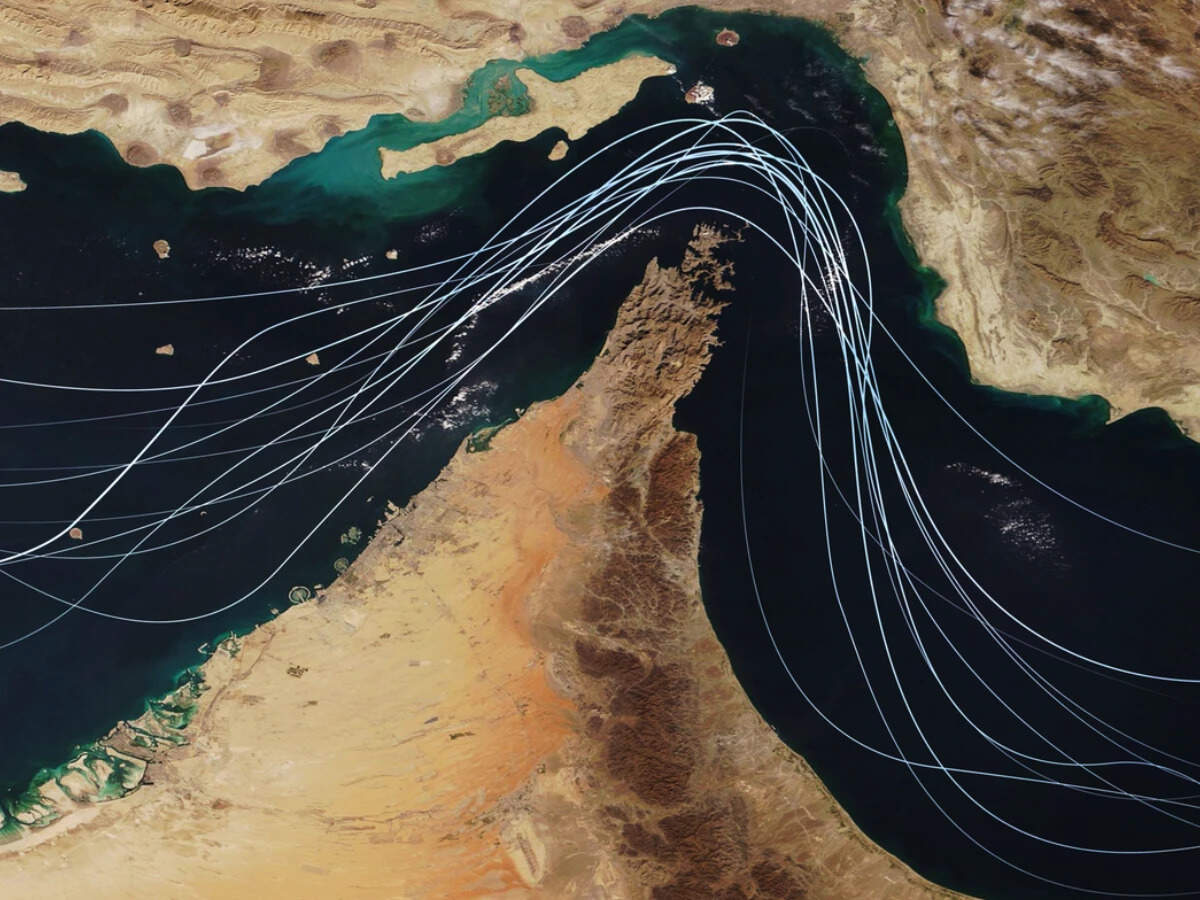
The Indian government has issued a critical advisory to ship owners, restricting the deployment of Indian seafarers in the Strait of Hormuz due to escalating hostilities in the Gulf.
Key Takeaways
- The DGMA has directed ship owners to avoid deploying Indian seafarers on vessels transiting the Strait of Hormuz.
- The move follows a surge in attacks on commercial vessels like Mombasa B and GFS Galaxy in the region.
- The decision aims to protect the safety and welfare of Indian crew members amid intensifying Iran-US tensions.
- Seafarers are advised to coordinate with the Indian Navy’s Information Fusion Centre (IFC-IOR) during emergencies.
As the conflict in West Asia intensifies, the Indian government has taken a proactive stance to safeguard its maritime workforce. The Directorate General of Maritime Administration (DGMA) has issued a stern advisory to ship owners, managers, and Recruitment and Placement Service Licence (RPSL) companies. The directive explicitly instructs them to refrain from deploying Indian seafarers on vessels scheduled to traverse the Strait of Hormuz until further notice, citing the deteriorating security landscape in the Persian Gulf.
Rising Threats in Strategic Waterways
The advisory comes in the wake of a series of alarming attacks on merchant vessels operating near this strategically vital maritime corridor. The DGMA highlighted that several vessels, including Mombasa B, Al Bahyah, GFS Galaxy, MT WEDYAN, and AL REKAYYAT, have recently fallen victim to attacks. These incidents have underscored the heightened vulnerability of commercial shipping and the crews that navigate these volatile waters, making the deployment of Indian nationals a high-risk endeavor.
Geopolitical Volatility and Global Implications
The regional instability has been fueled by recent military strikes by the United States on Iranian military installations and coastal defense facilities. In response, Tehran has threatened to restrict regional energy exports, potentially choking one of the world's most critical oil transit routes. The Strait of Hormuz serves as a linchpin for global energy security; any disruption here has a domino effect on international markets and maritime safety protocols.
Enhanced Safety Protocols and Emergency Response
Beyond the deployment restrictions, the regulator has placed vessel masters in the Persian Gulf on 'high alert.' They are required to strictly adhere to Ship Security Plans and the International Ship and Port Facility Security (ISPS) Code. To ensure a rapid response mechanism, the DGMA has instructed seafarers in distress to immediately contact the DG Communication Centre (MMDAC) or the Indian Navy's Information Fusion Centre for the Indian Ocean Region (IFC-IOR). The government maintains that it is continuously monitoring the situation to prioritize the welfare of its citizens abroad.