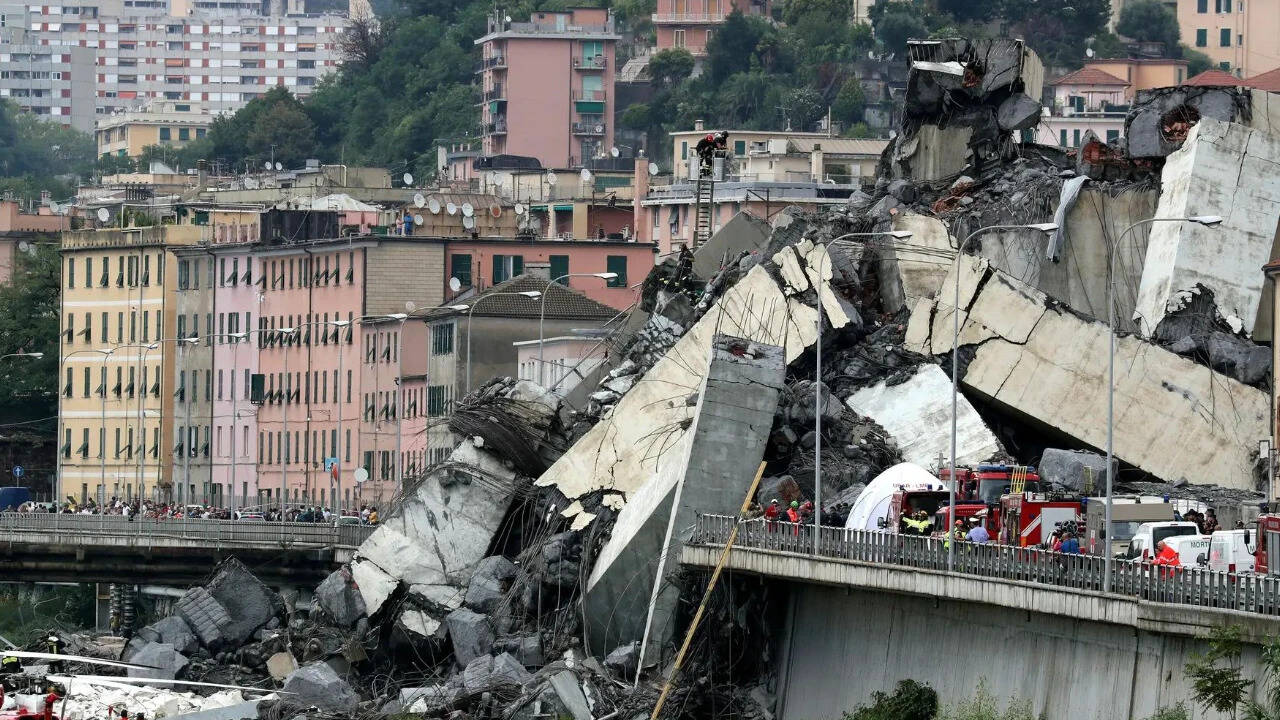
After the 2018 Morandi bridge disaster in Genoa, Italy, a court has convicted 32 individuals eight years later. The verdict delivers prison terms, fines, and bans, signaling a push for greater accountability in infrastructure safety.
मुख्य बिंदु (Key Takeaways)
- 32 individuals found guilty in the Genoa bridge collapse
- Sentences include imprisonment, hefty fines, and administrative bans
- Decision aims to drive reforms in Italy's infrastructure safety and accountability
The Genoa district court delivered a landmark verdict this week, convicting 32 defendants for their roles in the catastrophic collapse of the Morandi bridge on August 14, 2018. The collapse, which claimed 43 lives and injured dozens, has haunted Italy for nearly a decade, prompting relentless calls for justice and systemic reform.
Background of the Tragedy
Heavy rain triggered a section of the concrete‑cable‑stayed bridge to give way, sending a convoy of vehicles plummeting onto the highway below. The disaster exposed glaring weaknesses in Italy’s aging infrastructure and ignited a nationwide debate on the need for rigorous inspections and modernization.
Investigation and Prosecution
Prosecutors built a case against a broad spectrum of actors: senior executives of construction firms, the bridge’s design engineers, regional administrators, and public works inspectors. Charges ranged from gross negligence and failure to adhere to safety standards to deliberate omission of mandatory structural assessments.
The Verdict and Sentences
The court handed down varied punishments. Several defendants received multi‑year prison terms, while others were fined millions of euros and barred from holding public office or working on state‑funded projects. The judgment underscored that accountability will be a cornerstone of future infrastructure projects.
Reactions and Future Implications
Industry experts hailed the ruling as a watershed moment for engineering ethics in Italy. Prime Minister Giuseppe Conte’s administration, already accelerating a national infrastructure renewal plan, pledged to tighten inspection protocols and fast‑track the replacement of vulnerable structures.
For the families of the victims, the verdict offers a measure of closure, but it also serves as a stark reminder to governments worldwide: neglecting infrastructure safety can carry devastating human and legal costs.