Archaeologists in Sirolo, Italy have uncovered a pre‑Roman Piceni prince’s 2,500‑year‑old tomb, complete with a two‑wheeled chariot, weapons and nearby female burial textiles. The find offers fresh insight into elite burial customs of ancient Picenum.
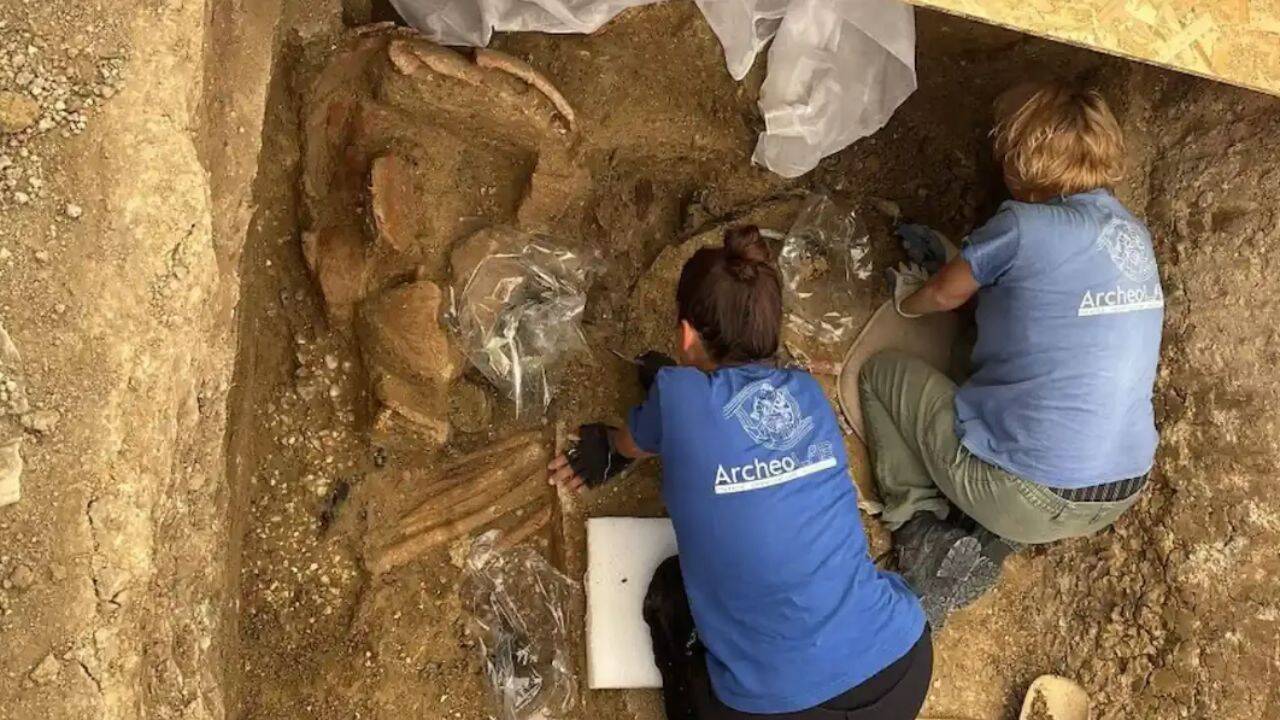
In the coastal town of Sirolo on Italy’s Adriatic shoreline, a remarkable archaeological discovery has shed new light on pre‑Roman Italy. Researchers have unearthed a 2,500‑year‑old tomb belonging to a Piceni warrior‑prince, intact with a two‑wheeled chariot, armor, and a suite of weapons.
Historical Context of the Piceni Civilization
The Piceni (or Picenum) inhabited the central Adriatic region from roughly the 8th to the 3rd centuries BCE, thriving long before Roman hegemony took hold. Their society was stratified, with a powerful aristocracy that displayed wealth through elaborate funerary rites. Yet, evidence of chariot burials—a hallmark of royal status in distant cultures—has been scarce in Italy, making this find particularly significant.
Tomb Architecture and Grave Goods
The primary burial chamber centers on a wooden, two‑wheel chariot, a clear indicator of high rank and possibly a symbolic vehicle for the afterlife. Accompanying the chariot are a long sword, spearheads, and fragments of a bronze cuirass, all reflecting the sophisticated metallurgical practices of the era. Adjacent to the prince’s grave, a secondary burial contained finely woven textiles and metal pins, suggesting a differentiated yet connected elite family group.
Scientific Methods Employed
State‑of‑the‑art techniques—including ground‑penetrating radar (GPR), 3‑dimensional laser scanning, and micro‑chemical analysis—allowed researchers to map the tomb without invasive digging. The chariot’s timber was identified as oak, while the metallic artifacts displayed a tin‑bronze alloy, consistent with known Piceni metalworking recipes.
Implications for Pre‑Roman Studies
By confirming the presence of a chariot burial in Picenum, the discovery challenges previous assumptions that such grandiose funerary customs were limited to the Mediterranean east. Scholars now anticipate further elite tombs that could reshape our understanding of social hierarchy, trade networks, and cultural exchange prior to Roman domination. Future excavations may reveal more about the role of women in Piceni society, as hinted by the textile‑rich secondary burial.