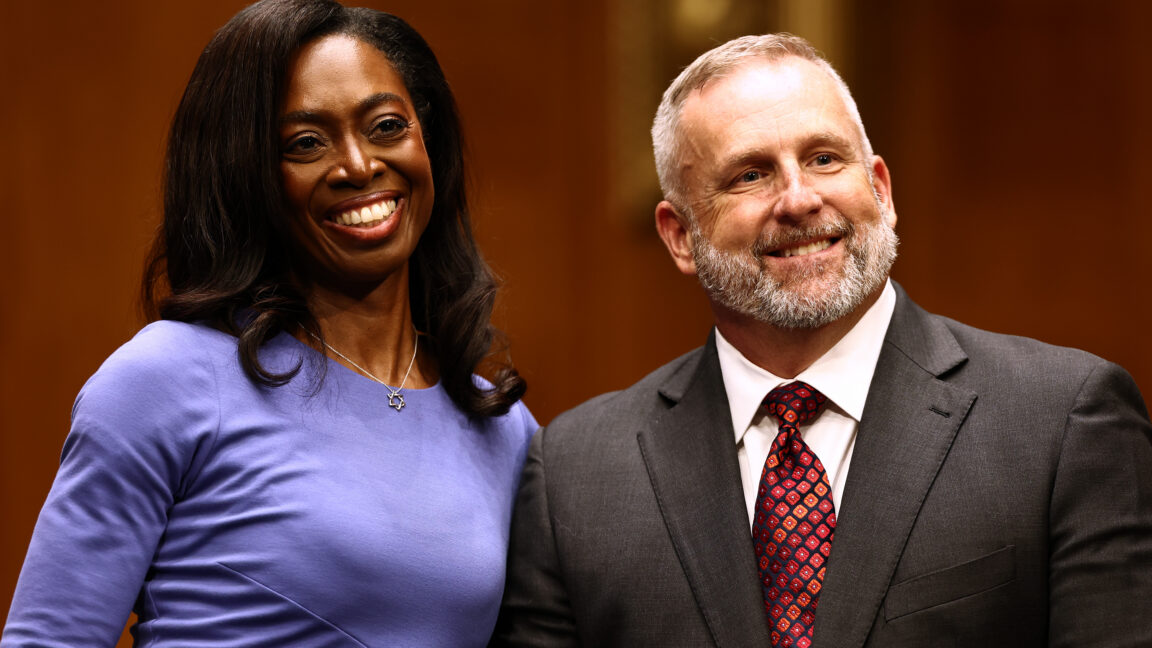
The Senate HELP Committee grilled two high‑profile Trump health nominees—Erica Schwartz and Sean Kaufman—on their qualifications and policy positions. Both stumbled in distinct ways, casting doubt on their confirmation prospects and highlighting deeper partisan tensions.
मुख्य बिंदु (Key Takeaways)
- Erica Schwartz, nominated for CDC director, failed to answer core questions on pandemic preparedness and data transparency.
- Sean Kaufman, the ASPR assistant secretary nominee, showed gaps in strategic planning for post‑COVID and climate‑driven emergencies.
- The hearings underline growing congressional‑executive friction that could reshape future U.S. health policy.
The Senate Committee on Health, Education, Labor and Pensions (HELP) held a tense hearing on Wednesday, putting two of President Trump’s top health nominees under a microscope. Erica Schwartz, put forward to lead the Centers for Disease Control and Prevention, and Sean Kaufman, slated for the Assistant Secretary for Preparedness and Response role, each faced probing questions that exposed weaknesses in their narratives.
Erica Schwartz: Credentials Meet Controversy
Schwartz brings an impressive résumé—a medical degree, a Master’s in Public Health, and a law degree—alongside a distinguished career as a Navy officer, former Chief Medical Officer of the U.S. Coast Guard, and Deputy Surgeon General during the first Trump term. Public‑health experts described her nomination as "cautiously optimistic" because she aligns with evidence‑based medicine and openly supports vaccinations, a stance that contrasts sharply with anti‑vaccine Health Secretary Robert F. Kennedy Jr.
During the hearing, however, she faltered on basic queries about CDC independence, data sharing protocols, and the agency’s role in future pandemic preparedness. Senators pressed her on whether she would resist political interference—a question that resonated with concerns about the agency’s credibility after the COVID‑19 crisis.
Sean Kaufman: Experience Under Question
Kaufman, a former military physician and disaster‑response specialist, was tasked with outlining the Department of Health and Human Services’ (HHS) strategy for large‑scale emergencies. His answers often drifted into abstract theory rather than concrete operational plans, prompting committee members to demand specifics on post‑COVID health threats, climate‑related disasters, and inter‑agency coordination.
Critics noted that his lack of clear, actionable proposals could hinder the ASPR’s ability to lead a swift, unified response in future crises—a critical shortcoming given the heightened scrutiny of federal emergency preparedness.
Political Implications and the Road Ahead
The stumbling of both nominees reflects more than individual missteps; it underscores a widening partisan divide over health policy. A rejection would force the Trump administration to identify alternative candidates, extending the confirmation timeline and potentially delaying key public‑health initiatives.
Moreover, the hearings raise broader questions about the autonomy of CDC and ASPR, the allocation of federal resources, and the political pressures that shape health‑security decisions. Analysts warn that Congress is likely to demand nominees who not only align politically but also demonstrate unwavering commitment to scientific integrity.
Looking Forward
Future confirmations will probably hinge on a delicate balance between political loyalty and evidence‑based expertise. Strengthening dialogue between health experts and policymakers could mitigate the friction witnessed in these hearings, ensuring that America’s health infrastructure remains robust in the face of emerging threats.