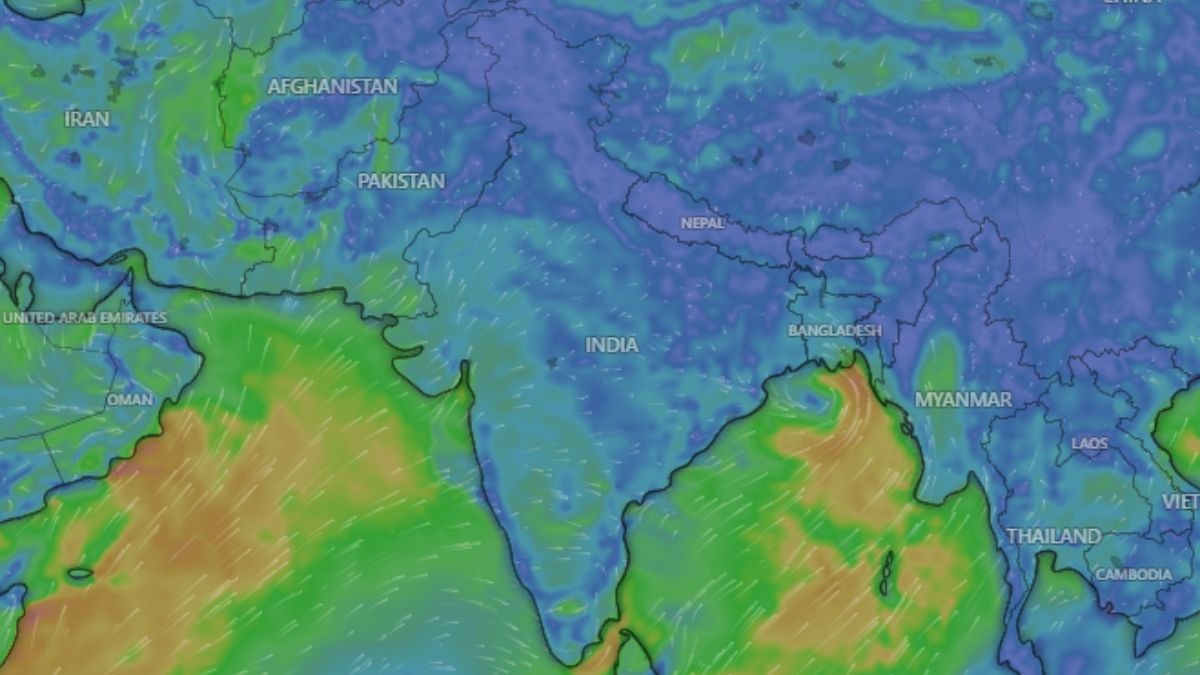
A sluggish monsoon has left nearly half of India dry, raising concerns over agricultural output and water security. Meteorologists point to the lingering effects of El Niño and an unusual shift in the monsoon trough as the primary drivers behind this deficit.
Key Takeaways
- Nearly 50% of India is experiencing a severe monsoon deficit, impacting Kharif crop sowing.
- The warming of the equatorial Pacific (El Niño) has disrupted traditional wind patterns and moisture flow.
- A northward shift in the monsoon trough has concentrated rainfall in the Himalayan foothills while leaving the plains dry.
India's lifeline, the southwest monsoon, has exhibited highly erratic behavior this season, leaving nearly half of the subcontinent parched. While some regions are battling devastating floods, vast swathes of Central, Southern, and Western India are facing significant rainfall deficits. This stark meteorological division has triggered alarm bells among policymakers, agricultural scientists, and farmers who depend heavily on these seasonal rains.
The El Niño Factor
At the heart of this dry spell is the lingering influence of El Niño, a climate pattern characterized by the unusual warming of surface waters in the eastern tropical Pacific Ocean. Historically, El Niño years have been synonymous with weak or delayed monsoons in India. Even as global climate models suggest a transition towards neutral conditions, the atmospheric memory of El Niño continues to suppress convective activity and weaken the moisture-laden winds originating from the Indian Ocean.
The Shifting Monsoon Trough
Adding to the complexity is the anomalous behavior of the monsoon trough—a low-pressure belt that typically oscillates across the Indo-Gangetic plains, distributing rainfall evenly. This year, the trough has frequently shifted northward, hugging the foothills of the Himalayas. Consequently, while states like Himachal Pradesh, Uttarakhand, and parts of the Northeast have witnessed torrential downpours and landslides, the agricultural heartlands of Punjab, Haryana, Uttar Pradesh, and Bihar remain largely dry.
Agricultural and Economic Implications
The uneven distribution of rainfall poses a direct threat to India's rural economy. The sowing of crucial Kharif crops, including paddy, pulses, coarse cereals, and oilseeds, has been delayed or severely impacted. Water reservoir levels in the deficit states have plummeted to critical lows, raising concerns about drinking water availability and winter crop irrigation (Rabi season). If the dry spell persists, it could fuel food inflation and strain the rural consumption engine, which is vital for India's overall GDP growth.
Future Outlook and Adaptation
Climate change is increasingly making Indian monsoon patterns unpredictable, characterized by 'short bursts of extreme rain' followed by 'long dry spells.' Experts emphasize the urgent need for climate-resilient agricultural practices, such as adopting drought-tolerant crop varieties and enhancing micro-irrigation infrastructure. As the India Meteorological Department (IMD) monitors potential recovery phases, the current crisis underscores the critical vulnerability of India's agrarian economy to global climate shifts.